




<img src="https://secure.leadforensics.com/97241.png" style="display:none;">

Network visibility for water and wastewater utilities

Network Critical provides network visibility for water and wastewater utilities running SCADA controlled treatment works, pump stations and remote monitoring sites. Passive, fail-safe TAPs give OT and security teams complete traffic visibility without touching production control systems.

Network teams at these organisations run Network Critical visibility

  • Vodafone Logo
  • HSBC Logo
  • bp logo
  • Airbus Logo
  • Darktrace Logo

How network visibility supports water and wastewater OT networks

Water and wastewater utilities run SCADA and ICS environments spanning treatment works, pump stations, reservoirs and remote outstations, often connected by legacy Modbus and DNP3 links with limited local staff. Any network change carries public health and safety consequences, so monitoring tools must be completely passive. Regulatory pressure from IEC 62443 and NIS2 style critical infrastructure mandates is pushing utilities toward continuous, audit ready traffic capture rather than sampled SPAN feeds. Network Critical's Passive Fiber Optical TAPs already secure comparable OT environments, including BP's multi building refinery operations, where fail safe, zero power monitoring protects both IT and OT systems without risking production.

Key challenges facing water and wastewater utilities

SPAN ports miss packets on SCADA links
Switch SPAN ports drop packets under load, corrupting Modbus and DNP3 telemetry exactly when anomaly detection matters most. Network Critical's Passive Fiber Optical TAPs create a full duplex mirror of every packet, including errors, so security and monitoring tools see complete SCADA traffic instead of a sampled, unreliable feed.
Any change risks production and public health
Treatment and pumping control systems tolerate almost no downtime, since an outage can affect water quality or supply. OT teams reject any tool that risks disruption, which is why passive, zero power TAPs with no active electronics or configuration requirements are the only acceptable option for live SCADA links.
Remote sites lack power and space for active gear
Pump stations, reservoirs and outstations are frequently unmanned, with no mains power, cooling or rack space for active monitoring appliances. Network Critical's Passive Fiber Optical TAPs need no power at all and offer the highest port density in the category, so visibility can reach even the smallest cabinet.
IT and OT convergence blurs the safety boundary
Digitisation is connecting historically closed ICS networks to corporate IT and cloud reporting systems, widening the attack surface into control equipment. Network Critical's Bypass TAPs let inline security tools protect the IT and OT boundary while failing open automatically, so a tool fault never takes down the live link.

Why water and wastewater utility teams come to Network Critical

We're certifying OT segmentation and need continuous, audit ready traffic evidence.

We're converging IT and OT and can't risk bridging safety critical control networks.

We've had a SPAN port drop packets during an SCADA anomaly investigation.

We're deploying at unmanned pump stations with no power or rack space.

We're under board pressure after ransomware hit a peer utility or pipeline operator.

We need to prove to auditors that our monitoring never touches live control traffic.

Key capabilities for water and wastewater utilities

Fail-safe passive capture

 Network Critical's Passive Fiber Optical TAPs require no power and contain no active electronics, so a mirror copy of SCADA and IT traffic reaches monitoring tools without ever risking the live link. Preconfigured split ratios mean plug in deployment with no ongoing maintenance. 

Hybrid aggregation for mixed speed OT and IT links

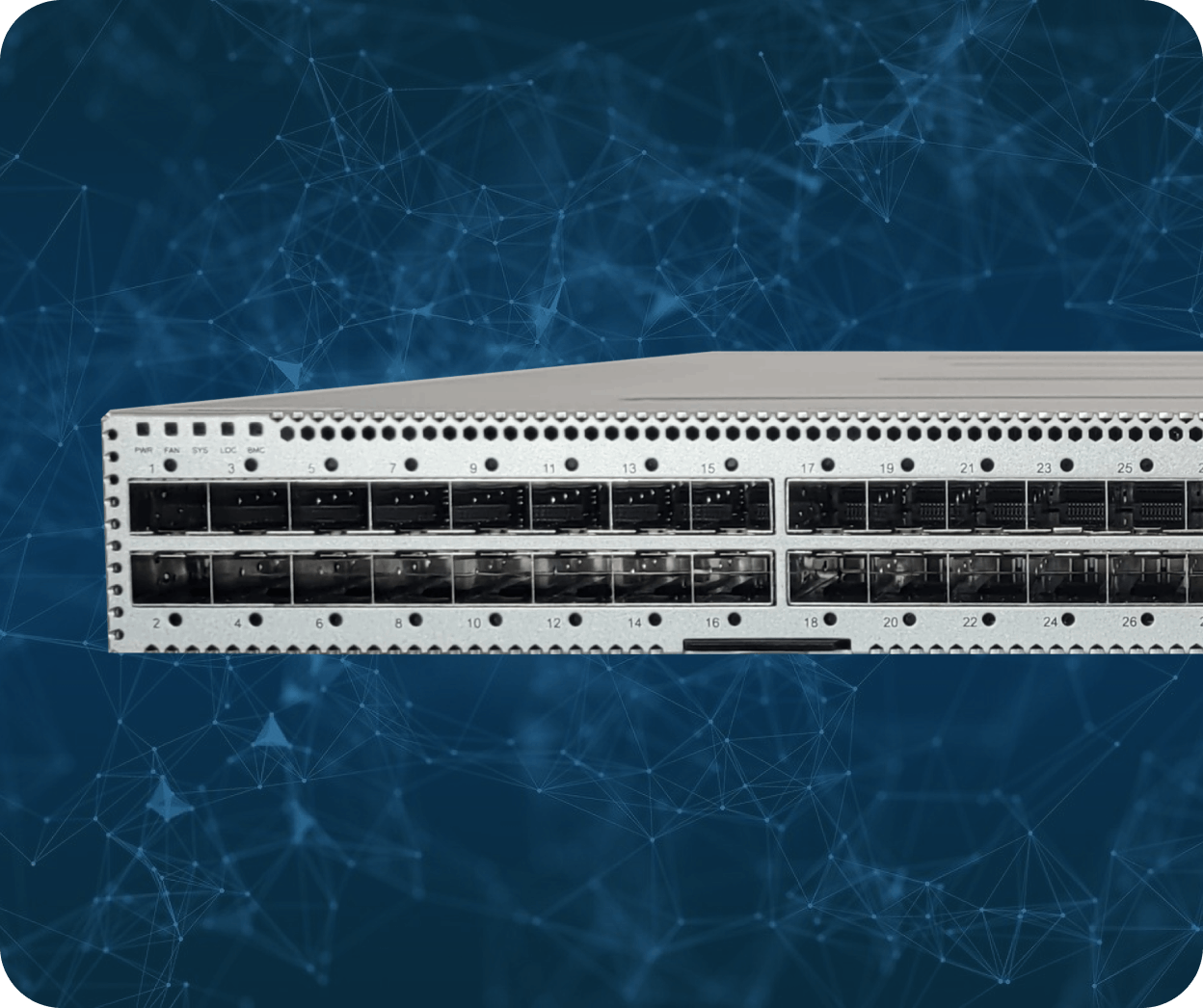
 Treatment plants often mix legacy 1G copper SCADA links with newer 10G IT infrastructure. Network Critical's SmartNA-XL combines TAP and packet broker functions in a single 1RU chassis, aggregating multiple low speed feeds onto fewer monitoring tools and cutting CAPEX. 

Unified visibility across distributed sites

 Utilities manage treatment works, pumping stations and reservoirs spread across a wide territory. Drag-n-Vu gives a single pane of glass for configuring TAPs and packet brokers across every site, so a small OT team can manage visibility without travelling to remote locations. 

Zero trust segmentation for control boundaries

 Utilities converging IT and OT need to verify segmentation, not just monitor it. Network Critical's INVIKTUS gives security teams an invisible network presence for zero trust verification, so IT and OT zones stay provably separated without adding another device an attacker can target. 

Best network visibility for water and wastewater utilities solution

Passive Fiber Optical TAPs: fail-safe visibility for SCADA and ICS networks

  • Zero power passive design: no risk from power glitches or outages at unmanned sites
  • Up to 16 TAPs per 1RU, the highest port density in the category for space constrained cabinets
  • Multi-mode fiber support from 1Gbps to 10Gbps, single mode from 1/10/40/100Gbps
  • Low insertion loss as low as 1.3dB, preserving live link performance
  • Preconfigured split ratios ship ready to deploy, no configuration or ongoing maintenance
  • Full duplex mirror copy including errors, for complete forensic and compliance capture
  • Pairs with SmartNA-XL for hybrid aggregation of mixed speed SCADA and IT links
  • Managed alongside Drag-n-Vu for single pane of glass configuration across distributed sites
SmartNA-PortPlus on blue background
person typing on futuristic laptop

When Passive Fiber Optical TAPs is the right fit for water and wastewater utilities

  • You operate SCADA or ICS links where any active device in the path is an unacceptable safety risk.
  • You're certifying to IEC 62443 or similar critical infrastructure mandates and need continuous, audit ready capture.
  • You're deploying across unmanned pump stations, reservoirs or outstations with no mains power or rack space.
  • You're consolidating IT and OT visibility onto a single platform without bridging the two networks.

Case study: network visibility for water and wastewater utilities

BP, protecting IT and OT systems across multi-building refineries

BP needed to monitor switches, firmware and security protocols across refineries spanning 10 to 12 buildings without impacting live production traffic. BP deployed Network Critical Passive Fiber Optical TAPs to create a passive mirror of full duplex traffic, giving centralised, remote visibility across IT and OT systems.

Read more
BP-1


 Continuous monitoring is critical to digitization and automation of our many monitoring systems. Being able to monitor remote sites from a single location keeps our systems up to date without having a large staff running around in trucks.

 —  Senior Project Manager, Refining Operations, BP


Why SPAN ports fail for water and wastewater utilities

SPAN drops packets exactly when it matters

 SPAN ports are a secondary switch function and drop packets under load, exactly when an anomaly or intrusion attempt needs full visibility. Network Critical's Passive Fiber Optical TAPs create a dedicated full duplex mirror of every packet, including errors, so nothing on a monitored SCADA link goes unseen. 

SPAN cannot deliver fail-safe OT deployment

 A SPAN port is an active switch feature that can be reconfigured, powered down or exhausted by contention, none of which is acceptable on a live control network. Passive optical TAPs use no power and no active electronics, so the link stays up even during a total power failure. 

SPAN cannot prove compliance grade capture

 Auditors assessing IEC 62443 segmentation or critical infrastructure mandates need continuous, tamper evident evidence, not sampled switch output. Passive Fiber Optical TAPs and Network Critical's Bypass TAPs give a complete, unbroken traffic record across IT and OT boundaries, with no risk to the production link. 

Why choose Network Critical for network visibility for water and wastewater utilities

Water and wastewater utilities can't gamble network changes against public health and safety. Network Critical's Passive Fiber Optical TAPs and SmartNA-XL hybrid TAPs bring the same fail-safe, zero power design that protects BP's refinery operations to SCADA and ICS networks, without bridging IT and OT.

Traditional packet broker vendors sell subscription-driven monitoring stacks built for enterprise data centres, not unmanned pump stations. Network Critical's modular, perpetually licensed hardware has already secured critical infrastructure and regulated environments at the Vodafone case study and the HSBC case study, proving the same passive approach scales from telecom cores to trading floors.

For utilities certifying to IEC 62443 or preparing for the next critical infrastructure audit, Drag-n-Vu gives a small OT team single pane of glass control across every site, while INVIKTUS extends zero trust segmentation to networks that can never bridge IT and OT.

Frequently asked questions about network visibility for water and wastewater utilities

  •  Network visibility for water and wastewater utilities is complete, passive capture of SCADA and ICS traffic across treatment works, pump stations and reservoirs for monitoring, security and compliance. It matters because an outage or a compromised control network can affect water quality and public safety, which is why utilities choose network TAPs over sampled SPAN feeds. 

  •  A network TAP creates a dedicated, full duplex mirror of every packet including errors, while a SPAN port shares switch resources and drops packets under load. Read the full comparison of network TAPs vs SPAN ports to see why utilities move away from switch mirroring on control networks. 

  •  Dropped packets mean monitoring and security tools see an incomplete picture of Modbus or DNP3 traffic, which can mask the early signs of equipment failure or an intrusion attempt. Network Critical's Passive Fiber Optical TAPs mirror the full duplex link instead, so no SCADA packet is missed. 
  •  Teams should evaluate whether a solution is fully passive with no active electronics, whether it needs power at remote sites, and whether it produces continuous evidence for audits. Network Critical's OT network monitoring solutions are built around these fail-safe requirements rather than retrofitted enterprise IT tools. 

  •  Passive Fiber Optical TAPs connect inline to a fibre link and split a predetermined portion of the optical budget to monitoring tools, with no configuration required. The mirrored traffic feeds any existing intrusion detection or SCADA historian tool alongside a Drag-n-Vu managed monitoring stack, without any change to the production link. 

  •  Yes. Passive Fiber Optical TAPs create a continuous, tamper evident copy of SCADA and IT traffic with zero active electronics, which supports the segmentation monitoring evidence that IEC 62443 audits expect. Pairing them with OT cybersecurity practices strengthens the audit trail further. 
  •  Passive Fiber Optical TAPs need no power at all, so they suit unmanned pump stations and outstations with no mains supply or cooling. For sites mixing legacy copper SCADA with newer IT links, SmartNA-XL adds hybrid TAP and packet broker aggregation in a single 1RU chassis. 

  •  Network Critical's clearest OT proof point is BP, which deployed Passive Fiber Optical TAPs across refineries spanning 10 to 12 buildings to monitor both IT and OT systems without impacting production. Read the BP case study for the full deployment, the closest verified parallel to water and wastewater OT networks. 
  •  Network Critical's TAPs and packet brokers are sold on perpetual licences rather than the recurring subscription models common among enterprise visibility platforms. Passive Fiber Optical TAPs also need no ongoing configuration or power, cutting deployment and maintenance cost across distributed OT sites compared with active alternatives. 
  •  Network Critical supports OT deployments through its partner ecosystem of OT security integrators alongside direct technical guidance on TAP placement, split ratios and Drag-n-Vu configuration. Utilities can also review verified deployments such as the BP case study as a reference for fail-safe OT monitoring. 

  •  Yes. Network Critical's Bypass TAPs give inline security tools automatic failover at the IT and OT boundary, so a tool fault never takes the control network down. Combined with passive fibre TAPs on the OT side, utilities can monitor both zones without bridging them. 
  •  Packet filtering selects only the traffic monitoring tools need, reducing the volume sent to SIEM and SCADA analysis tools. Read what packet filtering is to understand how filtering on SmartNA-XL reduces tool cost and noise on utility OT networks without dropping the packets that matter.