




<img src="https://secure.leadforensics.com/97241.png" style="display:none;">

Packet capture for financial services

Network Critical provides packet capture for financial services running zero-latency trading floors, fraud detection stacks, and cross-border compliance capture.

Network teams at these organisations run Network Critical visibility

  • Vodafone Logo
  • HSBC Logo
  • bp logo
  • Airbus Logo
  • Darktrace Logo

Field-validated zero-latency visibility for global banking networks

Banks and trading operations cannot rely on SPAN to prove zero latency or complete capture across global links. Packet capture for financial services must deliver 100% visibility at line rate, without adding a microsecond of delay to trading traffic or fraud detection feeds. SPAN's sampled mirroring drops packets under load and cannot support the audit-grade evidence MiFID II and SOX examiners require. Network Critical's Passive Fiber Optical TAPs solve this at the physical layer, using zero-power splitting to mirror full-duplex traffic without touching live packets. The HSBC case study deployed these TAPs alongside SmartNA modular TAPs across UK and Hong Kong sites to achieve zero-latency, always-on monitoring.

 Key challenges facing financial services 

Latency cost on trading revenue
Any added delay on a trading link directly costs revenue. SPAN mirroring introduces jitter and packet loss precisely when microseconds matter most. Network Critical's Passive Fiber Optical TAPs use zero-power splitting to mirror full-duplex traffic with no measurable latency, keeping trading feeds intact.
MiFID II and SOX audit-grade capture
Regulators expect 100% capture, not sampled traffic, when reconstructing trade activity after the fact. SPAN's dropped packets leave gaps that fail audit review. Passive Fiber Optical TAPs create a complete mirror copy of every packet, including errors, giving compliance teams a defensible, gap-free record.
Inline fraud tooling without disruption
Fraud detection engines need every packet, not a sampled subset, to catch anomalies in real time. Network Critical's Bypass TAPs keep inline security and fraud tools protected, automatically rerouting traffic if a tool fails so monitoring never interrupts live payment flows.
Cross-border data residency and global deployment
Global banks run monitoring across multiple jurisdictions, from London to Hong Kong, each with its own data residency rules. Network Critical's SmartNA-PortPlus aggregates traffic from Passive Fiber TAPs at each site, so regional deployments stay locally installed while compliance and security policy stay centrally managed.

Why financial services teams come to Network Critical 

 We deliver zero-latency capture so trading revenue never depends on network shortcuts 

We give compliance teams 100% capture, not the sampled data SPAN provides 

We protect fraud detection tools with every packet, captured in real time 

We centralize compliance evidence across UK and Asia deployments, from a single platform 

 We close packet-level evidence gaps before the next trade surveillance review 

We prove full traffic monitoring coverage for your next cyber insurance renewal 

Key capabilities for financial services 

Zero-latency passive capture

Network Critical's Passive Fiber Optical TAPs split the optical signal at the physical layer, sending a full mirror copy to monitoring tools while live trading traffic passes through untouched. Insertion loss as low as 1.3dB means the network never notices the tap is there. 

High port density for global deployment

Up to 16 TAPs fit in a single 1RU shelf, letting banks monitor dense fiber environments in London, Hong Kong, or New York without consuming scarce rack space. Units ship preconfigured, so remote sites deploy without a dedicated engineer on-site.

Fail-safe inline tool protection

 Bypass TAPs detect when an inline fraud or security appliance stops responding and automatically reroute traffic around it, so a failed tool never takes down a live payment feed. Maintenance windows no longer mean unplanned trading downtime. 

Aggregation and compliance-grade audit trail

Network Critical's SmartNA-PortPlus aggregates TAP output for monitoring and SIEM platforms, with RADIUS and TACACS+ authentication support for auditable access control. SNMPv3 integration keeps compliance teams able to prove who touched the visibility layer and when. 

Best packet capture for financial services solution

Passive Fiber Optical TAPs

  • Zero-power passive design, immune to power loss or glitches at remote sites
  • Up to 16 TAPs per 1RU, the highest port density in the category
  • Insertion loss as low as 1.3dB across LC, MPO, and BiDi fiber variants
  • Supports 1G to 100G links on both multimode and single-mode fiber
  • Ships preconfigured to the required split ratio, no ongoing configuration or maintenance
  • One-way physical design prevents any data backflow onto the live network
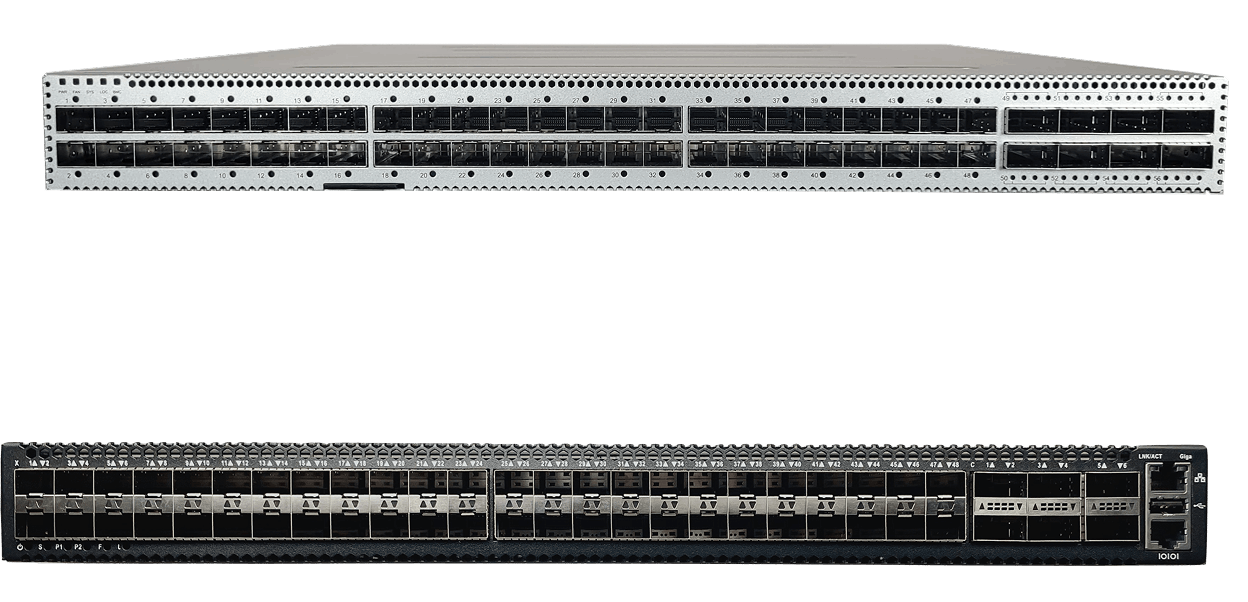
  • Pairs with SmartNA-PortPlus for aggregation to monitoring, SIEM, and fraud detection tools
  • Pairs with SmartNA for branch-level and edge tapping at regional offices
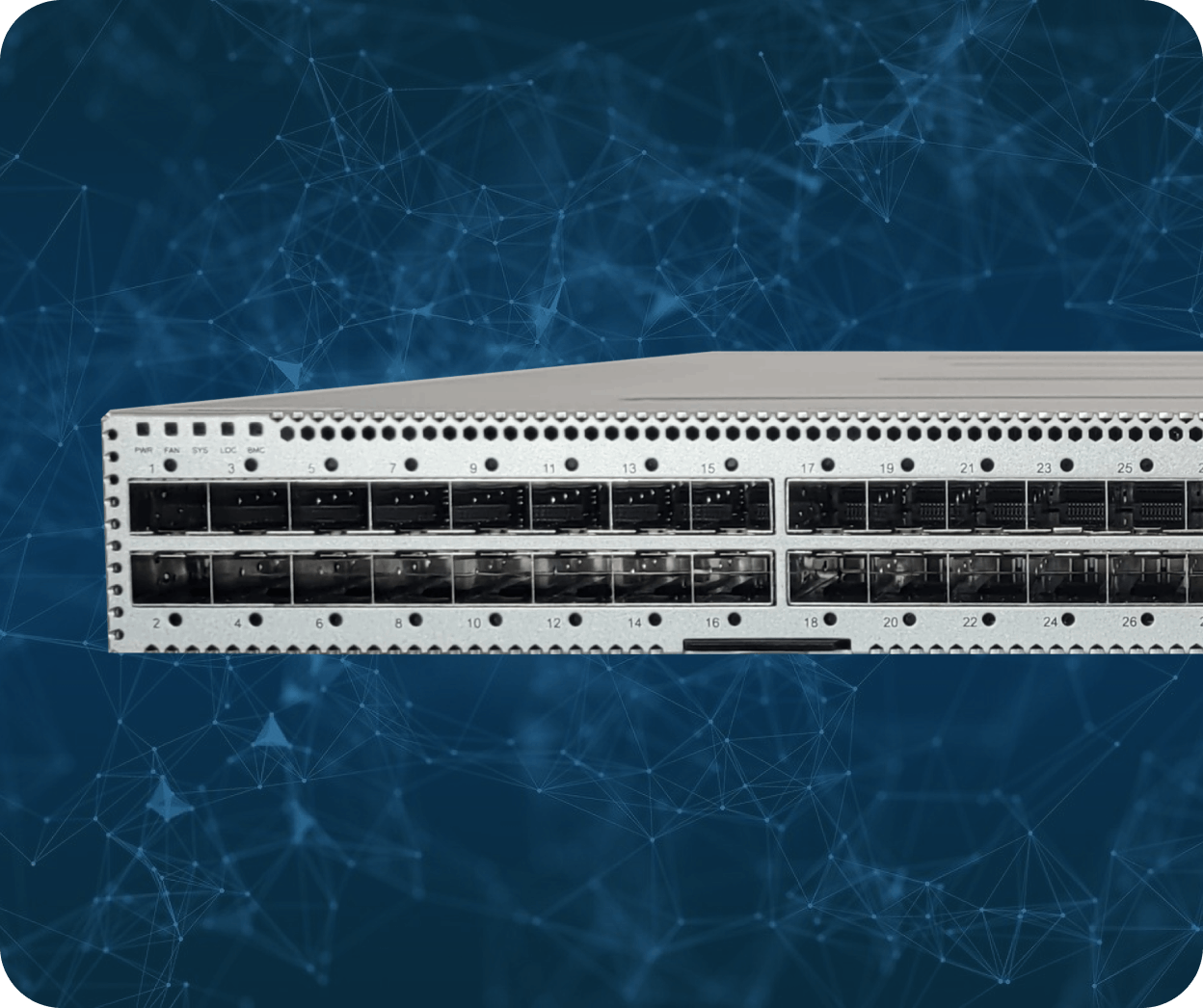
SmartNA-PortPlus on blue background
person typing on futuristic laptop

When Passive Fiber Optical TAPs are the right fit for financial services

  • You're protecting a trading floor where any added latency directly costs revenue
  • You need 100% capture for MiFID II, SOX, or trade surveillance audit evidence
  • You're protecting fraud detection tools that must see every packet, not a sample
  • You operate across multiple regions and need consistent, centrally managed compliance evidence

Case studies: packet capture for financial services

HSBC

HSBC deployed Passive Fiber Optical TAPs alongside SmartNA modular TAPs to monitor international banking traffic without adding latency. The zero-power TAPs created a full mirror copy of live traffic across UK and Hong Kong links, giving HSBC's network teams complete visibility while keeping monitoring installations non-disruptive.

Read more

Darktrace

While not a financial services deployment, the Darktrace case study shows the same SmartNA-PortPlus platform financial SOC teams rely on for fraud detection. Darktrace's AI threat engine integrates directly via API, feeding on full-fidelity traffic to detect anomalies that sampled SPAN data would miss entirely. 


Read more
HSBC


I had great pleasure in working with HSBC and their senior network teams to create and deploy a unique global visibility network that maximizes their current and future monitoring requirements." 

 —   Senior Technical Consultant, HSBC 


Why SPAN ports fail for financial services 

Latency that breaks trading analytics

SPAN mirroring adds processing overhead and buffer delay at exactly the point where trading systems can least afford it. A few microseconds of added latency can shift execution price and skew analytics used for best-execution reporting. Network Critical's Passive Fiber Optical TAPs add no measurable latency because the tap is entirely passive. 

Dropped packets during volume spikes

SPAN ports drop packets under the exact conditions that matter most for forensic and fraud investigation: high-volume trading events, market open, and incident response. Once a packet is dropped, it's gone. See the network TAPs vs SPAN comparison for how a mirrored copy avoids this entirely. 

No audit-grade evidence for MiFID II

MiFID II, SOX, and trade surveillance programs require proof of complete monitoring coverage, not a best-effort sample. SPAN cannot demonstrate this because it silently discards packets under load. A gap-free, physically mirrored copy of traffic is the only evidence that satisfies examiners.

Why choose Network Critical for packet capture for financial services

Network Critical has spent over 20 years building network access technology trusted by blue-chip clients, including the HSBC deployment that proved zero-latency, complete-capture monitoring across UK and Hong Kong banking networks without a single dropped packet.

Our Passive Fiber Optical TAPs use no power, so there's nothing to fail during an outage, and SmartNA-PortPlus aggregates that mirrored traffic to fraud detection, SIEM, and NDR tools without the per-port licensing costs or forklift upgrades that come with subscription-driven monitoring stacks.

Choosing between SPAN and a purpose-built TAP is really choosing between a silent failure mode and a defensible audit trail. The HSBC deployment and the Darktrace integration both show what full-fidelity traffic delivers that sampled data cannot.

Frequently asked questions about packet capture for financial services 

  • Packet capture for financial services is the practice of mirroring 100% of network traffic, including errors, for monitoring, fraud detection, and regulatory audit purposes. Network Critical's Passive Fiber Optical TAPs deliver this at the physical layer with zero added latency, unlike sampled SPAN mirroring. 
  • SPAN ports sample traffic and drop packets under load, especially during high-volume trading events when forensic and compliance evidence matters most. Passive Fiber Optical TAPs mirror the complete full-duplex stream instead, giving compliance teams a gap-free record that satisfies MiFID II and SOX examiners. 
  • No. Passive Fiber Optical TAPs are entirely passive, splitting the optical signal at the physical layer with insertion loss as low as 1.3dB. There's no processing, buffering, or active electronics in the traffic path, so live trading traffic passes through unaffected. Learn more about Passive Fiber Optical TAPs

  • MiFID II requires proof of complete, gap-free traffic capture for trade reconstruction and surveillance. Network Critical's TAPs mirror every packet, including errors, so compliance teams can demonstrate audit-grade coverage rather than the best-effort sampling that SPAN ports provide. See the HSBC case study for a live deployment example. 
  • Passive Fiber Optical TAPs mirror traffic out-of-band, so fraud detection tools see a full copy without ever sitting inline. For tools that must sit inline, Network Critical's Bypass TAPs automatically reroute traffic if the appliance fails, keeping payment processing live during maintenance or an outage. 
  • Up to 16 TAPs fit into a single 1RU shelf, giving banks high port density for space-constrained data centers and regional offices. This matters for global institutions running dense fiber links across multiple sites, such as the HSBC UK and Hong Kong deployment. 
  • They don't need power at all. The TAPs split the optical budget passively, so a power glitch or outage at a remote site has zero impact on monitoring continuity. This makes Passive Fiber Optical TAPs a common choice for financial institutions with distributed branch or data center footprints. 

  • Network Critical's SmartNA-PortPlus aggregates traffic from multiple Passive Fiber TAPs and forwards it to fraud detection, SIEM, and NDR tools at up to 1.8 Tbps line rate. RADIUS and TACACS+ authentication support gives compliance teams an auditable record of who configured the monitoring layer. 
  • A TAP creates a physical, full-duplex copy of every packet with no sampling, while a SPAN port is a switch feature that mirrors traffic in software and drops packets under load. See our explainer on network TAPs vs SPAN for a full comparison relevant to financial services networks. 
  • Yes. Passive Fiber Optical TAPs ship preconfigured to the required split ratio, so regional IT teams can install them locally with no ongoing configuration. This supported the HSBC rollout across UK and Hong Kong sites within a short deployment window. 

  • Because Passive Fiber Optical TAPs have no active electronics or management interface, deployment is largely plug-and-play. Teams connect the network and tool ports to the preconfigured unit, with no software configuration required, which is why Network Critical's TAPs suit fast-moving global rollouts. 
  • Network Critical uses perpetual hardware licensing rather than the subscription pricing common to enterprise visibility platforms and traditional packet broker vendors, removing recurring per-port fees. Explore SmartNA-PortPlus and Passive Fiber Optical TAPs pricing considerations directly with our sales team.