




<img src="https://secure.leadforensics.com/97241.png" style="display:none;">

Network TAPs for telecom backbone and core networks

Network Critical provides network TAPs for telecom backbone and core networks running multi-generation infrastructure from legacy TDM through 5G core, delivering zero-loss visibility at 100G and 400G scale.

Network teams at these organisations run Network Critical visibility

  • Vodafone Logo
  • HSBC Logo
  • bp logo
  • Airbus Logo
  • Darktrace Logo

Proven visibility across four generations of carrier network links

Carriers running multi-generation networks, where 2G through 5G traffic coexists on the same physical estate, cannot rely on SPAN ports to deliver the 100% accurate capture that QoS reporting and cross-border compliance require. Network TAPs for telecom backbone and core networks need to scale from legacy 1G and 10G copper links to 100G and 400G fibre backbones without forcing a forklift refresh every time a tool changes. Network Critical's approach pairs hardware TAP access with packet broker aggregation so monitoring and security tools see full-fidelity traffic regardless of link speed or generation. The Vodafone deployment is the clearest proof point: a major European mobile carrier uses this combination to deliver 100% accurate QoS monitoring across four generations of network links, directly supporting its churn-reduction programme.

 Key challenges facing telecom backbone and core networks 

Multi-generation network complexity
Voice, data, video, and VoIP all traverse different generations of the same network simultaneously. Integrating the latest 100G and 400G monitoring tools with 1G and 10G legacy links demands a visibility layer that handles physical media conversion and speed mismatch without adding delay. Network Critical's SmartNA-PortPlus HyperCore is built for exactly this kind of mixed-generation aggregation.
Tool proliferation without aggregation
Every new monitoring or security tool added to a SPAN-based architecture typically demands its own full port allocation. Without aggregation, port costs and rack space scale linearly with tool count. Network Critical's SmartNA-XL consolidates multiple links onto fewer high-speed tool ports, extending the useful life of existing monitoring investments.
Cross-border compliance reporting
Carriers operating across European borders are required by regulation to provide 100% accurate, auditable capture, not statistically sampled traffic. SPAN sampling cannot support the compliance reporting that lawful interception and cross-border data rules demand at carrier scale.
Customer churn linked to network quality
Subscriber churn is one of the few metrics carriers can directly influence through network quality. Continuous, complete traffic visibility, managed through Network Critical's Drag-n-Vu interface, lets operations teams catch and resolve QoS degradation before it becomes a customer complaint.

Why telecom teams come to Network Critical

We give carriers full-fidelity visibility on every generation of network link, without forcing a forklift refresh. 

We aggregate legacy 1G and 10G links onto modern 100G and 400G monitoring tools in a single chassis. 

We support cross-border compliance reporting with 100% accurate, audit-ready capture. 

We eliminate SPAN port contention so new monitoring and security tools provision faster. 

We scale port count incrementally as backbone speeds increase, without replacing the base unit. 

We connect telecom operations data to machine learning security tools through API-driven traffic control. 

Key capabilities for telecom backbone and core networks 

Zero-packet-loss capture at line rate

Network Critical's SmartNA-PortPlus delivers non-blocking 1.8 Tbps throughput across 48 to 194 ports of 1, 10, 25, 40, and 100 Gbps traffic, so monitoring tools receive every packet at full line rate rather than a sampled subset. 

Aggregation of mixed-speed links

Legacy 1G and 10G copper links and modern 100G and 400G fibre backbones can be aggregated onto a single tool port set, extending the working life of existing monitoring infrastructure while new high-speed tools are added incrementally.

Scale-out without forklift upgrades

Adding capacity means adding another base unit that operates as part of the same managed system, not replacing what is already deployed. Port counts grow from 48 up to 194 ports on SmartNA-PortPlus, or up to 256 ports on the HyperCore platform, with no re-deployment of existing units. 

Zero-latency core link access

Where backbone links cannot tolerate any added delay, Passive Fiber Optical TAPs provide zero-power, zero-latency optical access that does not introduce a point of failure into the live link. 

Best network TAPs for telecom backbone and core networks solution 

SmartNA-PortPlus HyperCore

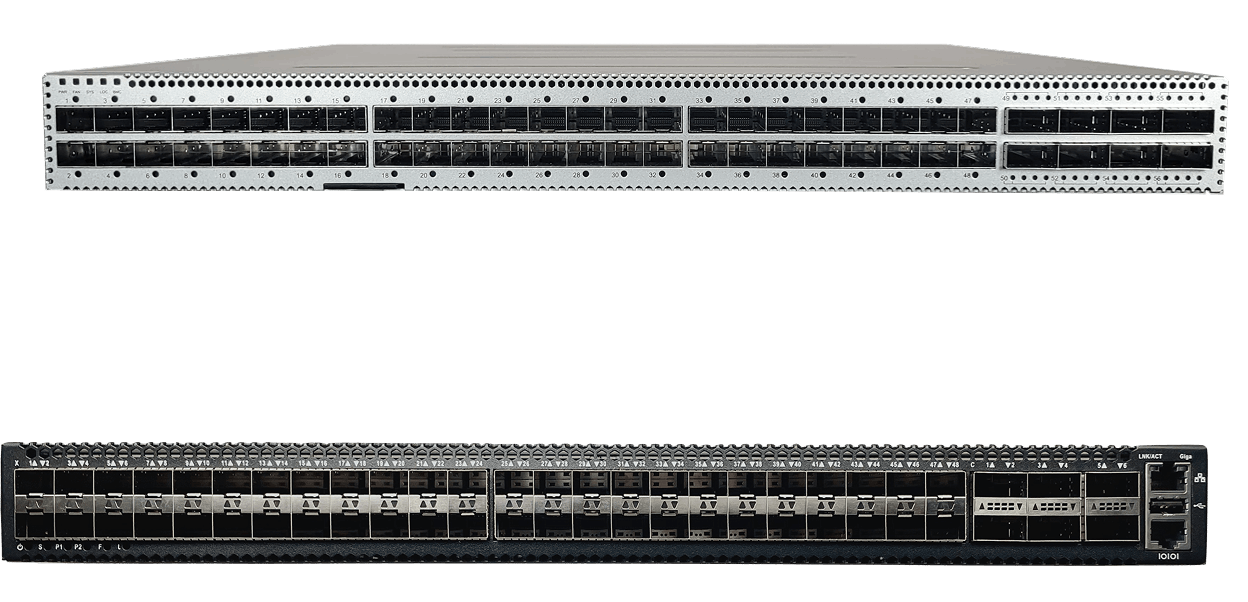
For carriers running or planning 100G, 200G, and 400G backbone refreshes, the SmartNA-PortPlus HyperCore bridges ultra-high-speed core links with existing monitoring, security, and compliance tooling in a single 1RU chassis.

  • 32 x QSFP-DD interfaces supporting 10, 25, 40, 50, 100, 200, and 400 Gbps directly
  • Expandable to 256 ports of 10, 25, 40, and 50 Gbps using breakout cables, without changing chassis
  • Non-blocking line-rate throughput of 25.6 Tbps
  • Session-aware load balancing by IP address, protocol, port, VLAN, or MAC address
  • Custom P-Tag functionality for complex, multi-stage traffic processing workflows
  • Managed through Drag-n-Vu, a single graphical interface across the entire system
  • SNMPv3 and RADIUS or TACACS+ authentication for audit-ready management access
  • Dual hot-swap power supplies and fans for carrier-grade resilience
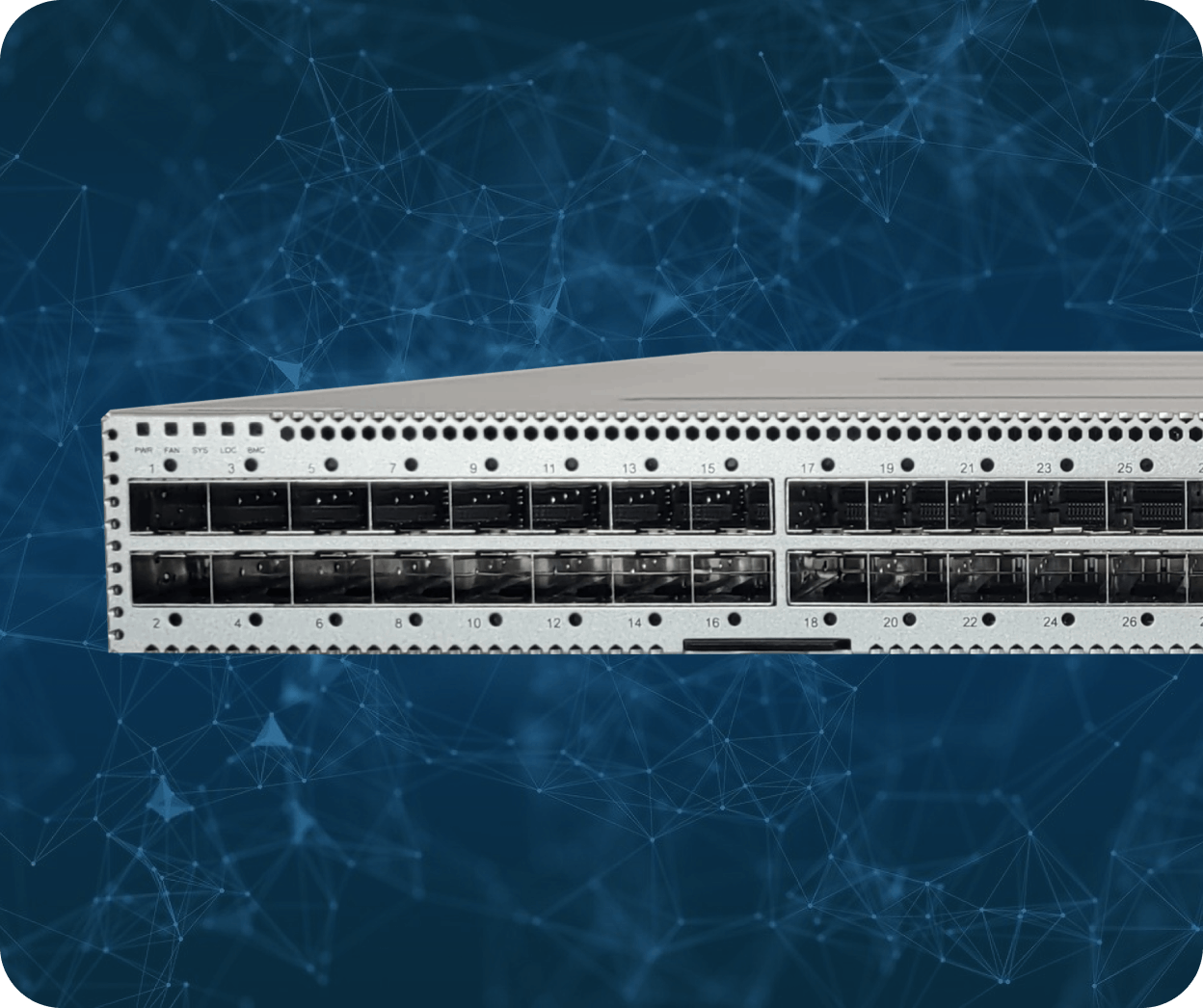
SmartNA-PortPlus on blue background
person typing on futuristic laptop

When SmartNA-PortPlus HyperCore is the right fit

  • You are refreshing backbone or core links to 100G, 200G, or 400G and need scale-out visibility without replacing the base unit later
  • You operate a multi-generation network where 2G through 5G traffic, or legacy TDM alongside IP backbone, coexist on the same estate
  • You need compliance-grade, 100% accurate capture for cross-border or lawful interception reporting
  • You are consolidating monitoring tools onto fewer high-speed ports and want transparent, perpetual licensing instead of recurring per-port fees on a SmartNA-PortPlus platform

Case studies: network TAPs for telecom backbone and core networks in telecom

Vodafone

A major European mobile carrier uses Network Critical's SmartNA-XL hybrid TAPs and SmartNA-PortPlus packet brokers to deliver 100% accurate QoS monitoring across four generations of network links, supporting both customer churn reduction and European cross-border compliance reporting requirements 

Read more

Darktrace

Darktrace integrates its self-learning threat detection platform with Network Critical's SmartNA-PortPlus through a direct API, allowing the security tool to autonomously control packet broker filtering and port mapping as network conditions change in real time. 

Read more
Vodafone-1


Developing and managing Key Performance Indicators is all about accuracy of information. The Network Critical products are providing 100% accurate traffic visibility on the key links, which is vital for us.

 —  Network Performance Monitoring Engineer, Vodafone


Why SPAN ports fail for telecom backbone and core networks 

SPAN drops packets under load

SPAN mirroring is a best-effort, lower-priority switch function. During peak traffic or network events, the switch deprioritises mirrored packets first, which means QoS and KPI data is built from incomplete samples exactly when accuracy matters most.

SPAN cannot scale to 400G backbones

Carriers still running 10G or 40G SPAN ports cannot monitor a 5G core or modern IP backbone at line rate without a forklift switch replacement. Network Critical's SmartNA-PortPlus HyperCore scales to 400G without replacing what is already in the rack. 

SPAN cannot deliver compliance-grade capture

Cross-border regulation and lawful interception obligations require 100% accurate, auditable traffic capture, not statistically sampled visibility. SPAN was never designed as a compliance-grade capture mechanism, which leaves carriers exposed during an audit. Read more on network TAPs versus SPAN ports.

Why choose Network Critical for network TAPs for telecom backbone and core networks

Network Critical has spent more than 20 years building TAP and packet broker technology specifically for carriers managing multi-generation networks, not retrofitting enterprise visibility platforms for telecom scale. The Vodafone deployment shows what that focus delivers in practice: 100% accurate QoS monitoring across four generations of network links, reducing churn and supporting cross-border compliance without disrupting live traffic.

Where traditional packet broker vendors price by subscription and per-port licence, Network Critical's SmartNA-PortPlus HyperCore and SmartNA-PortPlus platforms use perpetual licensing with modular, scale-out growth. Carriers add capacity as backbone speeds increase without re-deploying or replacing units already in production.

Network Critical's tool-agnostic architecture also future-proofs the visibility layer itself. The Darktrace integration demonstrates API-driven, machine-to-machine control of packet broker filtering, a pattern that extends naturally to other network packet brokers and network TAP deployments across a carrier's full estate.

Frequently asked questions about network TAPs for telecom backbone and core networks 

  • A network TAP is a hardware device that copies traffic from a live network link without altering or delaying it. For telecom backbone and core networks, this matters because compliance reporting, QoS measurement, and security monitoring all depend on seeing 100% of traffic rather than a sampled subset. 
  • A network TAP passively duplicates every packet at line rate, while a SPAN port mirrors traffic as a lower-priority switch function that drops packets under load. For QoS monitoring, that difference determines whether the data feeding churn and compliance reporting is accurate. See the full TAP versus SPAN comparison
  • When SPAN drops packets during a traffic spike or network event, QoS and KPI reporting becomes built from incomplete data, masking the real cause of subscriber complaints. This directly undermines churn-reduction programmes and weakens evidence available during a compliance audit. 

  • Teams should evaluate non-blocking throughput at the relevant port speed, scale-out capacity without forklift replacement, support for mixed-generation link speeds, and management overhead. Network Critical's SmartNA-PortPlus is built around exactly these criteria for growing carrier networks. 
  • SmartNA-PortPlus HyperCore connects to any monitoring, security, or compliance tool through standard physical interfaces and an integrated API, so tools can be added or swapped without re-architecting the underlying network access layer. 
  • Yes. The platform supports 10 through 400 Gbps directly across 32 QSFP-DD interfaces in a single 1RU chassis, which is purpose-built for the throughput and port density carriers need when refreshing backbones for 5G core deployment
  • Carriers can deploy SmartNA-PortPlus for 1G to 100G scale-out aggregation, SmartNA-PortPlus HyperCore for 400G backbone refreshes, SmartNA-XL for mixed-speed legacy links, or Passive Fiber Optical TAPs for zero-latency access on core fibre links. 
  • The Vodafone case study shows SmartNA-XL and SmartNA-PortPlus delivering 100% accurate QoS monitoring across four network generations, while the Darktrace integration shows API-driven autonomous traffic control for security tooling on the same packet broker platform. 
  • Network Critical uses perpetual licensing with no recurring per-port subscription fees, in contrast to subscription-driven monitoring stacks common among enterprise visibility platforms. Carriers add capacity through modular scale-out hardware rather than ongoing licence renewals. 
  •  Network packet capture is the process of recording traffic from a network link for analysis. A packet broker, such as Network Critical's SmartNA-PortPlus, sits between TAPs and monitoring tools to aggregate, filter, and route that captured traffic efficiently. 

  • Yes. Combining TAP and packet broker functions in a single device, as in Network Critical's hybrid TAP and packet broker range, reduces rack space, power draw, and the number of separate units a carrier needs to manage across mixed-generation links. 
  • Network Critical provides direct technical support alongside its network TAP and packet broker product lines, with modular hardware designed for hot-swap maintenance that avoids extended outage windows during servicing.