Top 7 Network TAPs for PCI DSS Compliance in 2026
PCI DSS v4.0.1 asks for something SPAN ports cannot promise: every packet, every time. Requirement 11.5.1 calls for intrusion detection on all traffic at the cardholder data environment (CDE) perimeter. It applies at critical points inside the CDE too. If packets go missing there, your IDS reports on a partial picture. And a Qualified Security Assessor (QSA) will ask how you know.
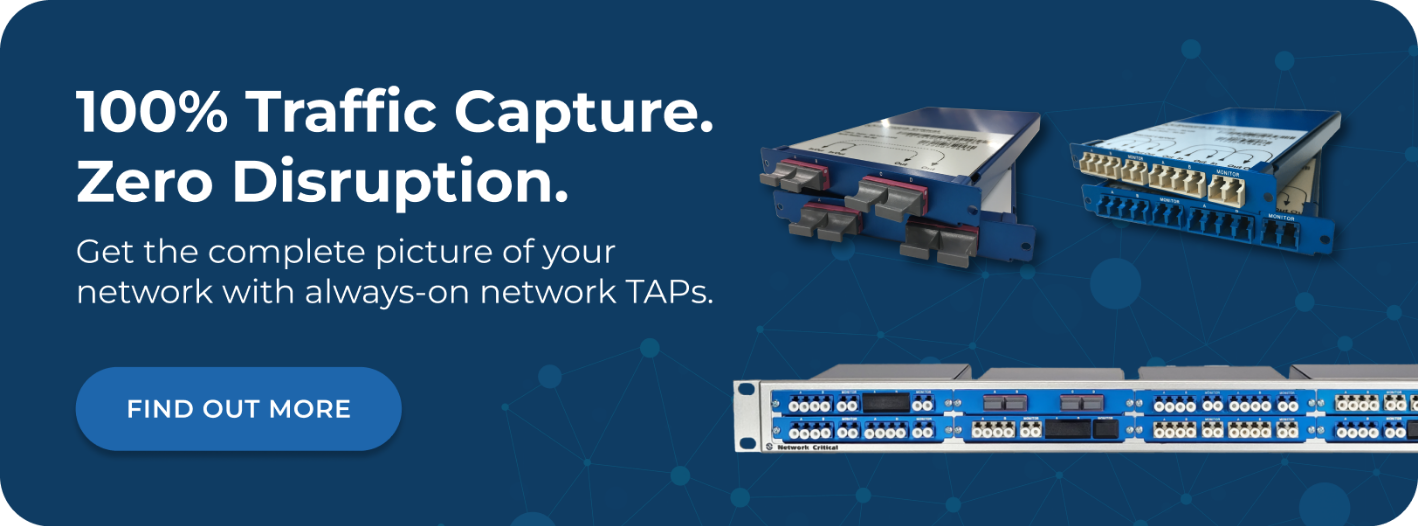
Hardware network TAPs close that gap. They copy full-duplex traffic passively, with no IP address and no effect on live links. A packet broker then filters that copy, masks card data and sends each tool only what it needs.
Vendors handle the compliance detail very differently. Masking depth varies. So does control over who can change a filter. This guide compares seven vendors on the features a PCI DSS assessment actually tests.
At a Glance: Network TAPs for PCI DSS Compliance
|
Vendor |
Key Feature / Strength |
Max Throughput |
|---|---|---|
|
Hybrid TAP and broker chassis, payload masking, TACACS+ and RADIUS AAA, perpetual licence |
Up to 400G |
|
|
GigaSMART pattern-based masking across a large visibility fabric |
Up to 400G |
|
|
Header masking and stripping on every Vision 400 port |
Up to 400G |
|
|
HyperEngine processing, masking and slicing for compliance |
Up to 400G |
|
|
Passive TAPs plus XtraTAP hybrids, no subscription fees |
Up to 400G |
|
|
X3-Series real-time data masking, 10-year passive TAP warranty |
Up to 400G |
|
|
nGenius packet flow switches tied to NETSCOUT analytics |
Up to 400G |
1. Network Critical
Network Critical designs and manufactures TAPs and packet brokers in the UK. Its customers include a global bank and a leisure operator that takes card payments every day.
The SmartNA-XL suits CDE perimeter links from 1G to 40G. Its modular 1RU chassis mixes failsafe copper, passive optical and bypass TAP modules. Payload masking and packet slicing remove sensitive content before traffic reaches your tools. That matters when an IDS or packet recorder would otherwise store full card numbers.
For core links, the SmartNA-PortPlus scales from 48 to 194 ports across 1G to 100G. It runs at 1.8 Tbps line rate. The SmartNA-PortPlus HyperCore extends this to 400G with 32 QSFP-DD interfaces.
Each platform runs Drag-n-Vu for drag-and-drop filters and port maps. It warns you before you build a path that breaks your rules. One click rolls back a bad change. TACACS+ and RADIUS support logs who changed what, and when. That supports the access control and logging evidence Requirements 8 and 10 ask for. Typical deployments complete in under two hours.
Proven results:
- Bourne Leisure: SmartNA-XL TAPs connected eight 1Gbps live links to one 10Gbps security tool, protecting customer payment data.
- HSBC: Passive optical TAPs and SmartNA delivered zero-latency monitoring from the UK to Hong Kong. Live traffic was unaffected.
- Darktrace: The SmartNA-PortPlus API lets Darktrace update filters and port maps automatically, with no manual intervention.
2. Gigamon
Gigamon is the largest vendor in network visibility. It reports a 51 per cent share of the deep observability segment, citing 650 Group data for Q1 2026. The GigaVUE TA Series handles traffic aggregation. Its GigaVUE-TA400 offers 32 ports running at 400G, 100G or 40G. The GigaVUE HC Series adds GigaSMART processing for deduplication, slicing and decryption.
GigaSMART Masking overwrites chosen packet fields with a fixed pattern before traffic leaves the fabric. Gigamon states that tools then never see, process or store the masked data. Masking can target a byte offset or a data format. So you do not need to know each exact value in advance. GigaVUE-FM manages the whole fabric from one interface. Precryption technology adds visibility into TLS traffic without separate decryption appliances.
Licensing is largely subscription-based, which affects multi-year budgeting. Configuring larger fabrics typically calls for trained specialists. Some enterprises want one visibility fabric across data centre and cloud. For them, platform breadth is the main draw.
3. Keysight
Keysight sells network visibility through the business it built on the Ixia acquisition. The Vision 400 is a 1RU packet broker with 24 SFP56 and 16 QSFP-DD ports. It supports speeds from 10G to 400G. The Vision 400 Series won a Frost & Sullivan 2024 Global New Product Innovation Award.
Every port can strip headers, add timestamps and mask MAC or IP header fields. These functions use no FPGA resources. A built-in FPGA PacketStack adds deduplication, packet trimming and burst protection at up to 400G. Trimming covers HTTPS and QUIC sessions, which cuts the volume your tools must store. Keysight also lists passive SSL decryption and data masking among its secure-traffic features.
The Vision Edge 400S brings many of these functions to a lower-cost edge broker. Keysight Visibility Orchestrator adds intent-based configuration across devices. Independent testing by The Tolly Group has validated its zero-packet-loss FPGA architecture. Pricing sits at the premium end of the market. Visibility is also one business line inside a much larger test and measurement portfolio.
4. APCON
APCON has built network visibility hardware in Wilsonville, Oregon, for more than 30 years. Its IntellaView platform combines chassis, swappable blades and management software, with port speeds from 1G to 400G. The 2024 range added a 32-port 400G EdgeSwitch and a 16-port 400G blade.
The HyperEngine blade handles advanced processing, including deduplication, pattern matching and NetFlow generation. Current documentation lists up to 400G throughput across four concurrent service engines. IntellaView supports masking for security and compliance, plus packet and flow slicing. APCON markets a dedicated regulatory compliance solution that positions these features for frameworks such as PCI DSS and HIPAA.
ApconTap passive optical TAPs cover 1G to 400G links. IntellaView Enterprise manages up to 200 switches centrally. In April 2026, APCON launched ThreatGuard, an AI-assisted security monitoring platform built on its visibility hardware. IntellaStore IV pairs the broker with on-box capture and analysis. Pricing is quote-based through channel partners.
5. Garland Technology
Garland Technology is a US-based specialist focused only on TAPs and packet brokers. It states that it charges no subscriptions or extra fees after purchase. Its products are manufactured in the USA.
Garland's passive fibre TAPs run from 1G to 400G, with BiDi and OM5 options. Each TAP is tested before it ships. For card environments with many low-speed links, the XtraTAP hybrid line adds filtering, aggregation and load balancing inside the TAP. Active copper TAPs add packet slicing. Garland also offers inline bypass TAPs to protect IPS and firewall appliances.
The company runs a large technology partner ecosystem, spanning NDR and OT security vendors. Its packet broker range covers core aggregation needs below enterprise incumbent price points. Garland's published materials do not highlight payload masking. Confirm it directly if your PCI design depends on it. Configuration follows a traditional TAP-led workflow rather than a graphical mapping tool. Coverage outside North America runs mainly through distributors.
6. Profitap
Profitap is a European vendor of TAPs, packet brokers and portable capture tools. Its fibre TAPs cover 1G to 400G in LC, MTP, BiDi and SC formats. MTP models support 400GBASE-SR8 links. The MOD-TAP lets you mix TAP modules of different speeds in one chassis. Passive fibre TAPs carry a 10-year warranty.
The X3-Series packet brokers include data masking. It removes sensitive data in real time and replaces it with a constant value before forwarding. The X2 and X3 ranges also offer packet slicing, SSL/TLS decryption, timestamping and deduplication. That mix suits teams that decrypt traffic for inspection but must keep card data away from analysts.
Profitap's IOTA appliances combine capture, storage and analysis, with role-based access control. They suit branch sites where a full monitoring stack is impractical. Field presence is strongest in Europe. North American coverage relies mainly on channel partners. Cloud TAP options extend capture into VMware, Kubernetes and Azure workloads.
7. NETSCOUT
NETSCOUT sells TAPs and packet flow switches alongside its nGeniusONE performance and Omnis security platforms. The nGenius PFS 5000 Series runs from 1G to 400G on open compute hardware. It handles filtering, load balancing, aggregation and replication. Self-organising mesh technology lets it scale from a single remote site to a large data centre.
NETSCOUT also supports inline deployments for IPS and firewall protection. Its External PowerSafe TAP sits inline and feeds raw packets to the packet flow switch. The company promotes all-in-one pricing, designed to avoid surprise resource limits as you scale.
The strongest fit is an estate already running NETSCOUT analytics. There, packet flow switches feed InfiniStream appliances and the wider nGenius platform directly. Want to mix SIEM and NDR tools from several vendors? Test how open that integration is in practice. The product map is broad, so allow time to understand which components your design needs.
How to Choose Network TAPs for PCI DSS Compliance
The right choice depends on how your CDE is built, not on headline speeds. Work through these criteria with your QSA's likely questions in mind.
Map Every CDE Perimeter and Critical Point
Requirement 11.5.1 expects intrusion detection on all traffic at the CDE perimeter and at critical points inside it. Build a link map before you compare hardware. Typical monitoring points include:
- Internet and WAN edges into the CDE
- Links between the CDE and corporate networks
- Payment application and database server uplinks
- Connections to third-party payment processors
Passive optical TAPs need no power, so they add no failure point to these links.
Keep Card Data Out of Your Tools
An IDS or packet recorder that stores full packets can end up storing primary account numbers (PANs). Requirement 3 then applies to those capture files. Payload masking and slicing at the broker stop card data reaching tools that do not need it. Ask each vendor whether masking works on payload content or only on header fields.
Treat the Visibility Layer as In Scope
A packet broker that sees CDE traffic will usually fall inside your assessment scope. It needs the same controls as any other in-scope system. Look for TACACS+ or RADIUS authentication, role-based accounts and SNMPv3. Every filter change should trace back to a named user.
Protect Inline Security Tools
Requirement 11.5.1 allows intrusion prevention as well as detection. But an inline IPS that fails can take a payment link down with it. A bypass TAP keeps traffic flowing when the tool fails or goes offline for updates.
Size for Log Retention and Tool Load
Requirement 10.5.1 asks for 12 months of audit log history, with three months immediately available. Every unnecessary packet you forward raises storage and SIEM costs. Filtering, deduplication and slicing cut volume before it reaches those platforms. Check that these features run at full line rate on your busiest links.
Compare Cost Over Several Assessment Cycles
PCI DSS is an annual commitment, so judge cost over three to five years. Subscription licensing can raise costs at every renewal. Perpetual hardware licences with fixed support fees are easier to forecast. Also factor in who will configure the platform and how long each change takes.
Frequently Asked Questions
Does PCI DSS require network TAPs?
No. PCI DSS does not name a specific monitoring technology. It does require intrusion detection on all traffic at the CDE perimeter and critical points, under Requirement 11.5.1. Network TAPs are the most dependable way to make sure your IDS receives all of that traffic.
Can a SPAN port meet PCI DSS monitoring requirements?
A SPAN port can feed an IDS, but it cannot guarantee complete capture. SPAN drops packets when oversubscribed and raises no alarm when it does. Most switches also limit you to a few concurrent sessions. Our comparison of network TAPs vs SPAN covers the trade-offs in detail.
What is the difference between a network TAP and a packet broker in a PCI environment?
A TAP gives you a complete copy of traffic from a monitored link. A packet broker decides what each tool receives from that copy. In a CDE, network packet brokers also mask card data and cut volume through filtering. Most PCI architectures use both.
Are network TAPs in PCI DSS scope?
Passive TAPs rarely raise scope concerns, but managed packet brokers usually fall in scope. A passive TAP has no IP address and no management interface. A packet broker handling CDE traffic is a system component your QSA will assess. Plan for access control, logging and change management on it. Document both in your network diagram, since assessors check data flows against it.
Can a network TAP see encrypted card data?
A TAP copies traffic exactly as it crosses the wire, so encrypted sessions stay encrypted. The bigger exposure is internal links. Card data may travel unencrypted between applications and databases there. Masking at the packet broker protects those flows before any tool stores them.
How much do network TAPs for PCI DSS cost?
Cost depends on link speed, port count and licensing model. A passive fibre TAP for one link costs far less than a 400G broker chassis. Licensing often matters more than list price, because subscriptions recur and perpetual licences do not. Ask vendors for a three-year total cost of ownership, not just a hardware quote.
Build Your PCI DSS Visibility Architecture With Network Critical
Your QSA will judge monitoring on evidence. That means complete capture at every CDE boundary and an audit trail for every change.
Network Critical delivers both from a single portfolio. Its hybrid TAPs combine TAP access and packet brokering in one chassis, with payload masking where card data flows. Perpetual licensing typically brings 3-year total cost of ownership 40 to 60 per cent below Gigamon and Keysight. Drag-n-Vu lets your network team deploy in under two hours, without specialist engineers.
Planning monitoring for your next PCI DSS assessment? Request a free network audit and speak to the Network Critical team.