Top 7 Data Diodes for NIST and Cross-Domain Compliance in 2026
Government agencies and critical infrastructure operators face a hard requirement. Some data must move in one direction only. NIST guidance on cross-domain security treats hardware-enforced transfer as the gold standard. It protects classified networks and Industrial Control Systems (ICS) from inbound compromise. A data diode delivers that guarantee at the physical layer. There is no software interface for an attacker to exploit. This differs from a firewall, which relies on configurable software rules. Choosing the right diode means weighing throughput, certification depth, and deployment fit. Some buyers need formal government accreditation. Others need a device that slots into an existing TAP or packet broker rack. This guide compares seven vendors offering hardware-enforced one-way transfer for government, defense, and Operational Technology (OT) networks.
Data Diode Vendor Comparison for Cross-Domain Security
| Vendor | Key Feature / Strength | Max Throughput |
|---|---|---|
|
Standalone or TAP/packet broker integrated diode, sub-1ms latency |
Up to 100G |
|
|
FPGA protocol filtering, US government validated |
Up to 100G |
|
|
SPAN-compatible diode TAPs, custom split ratios |
Up to 100G |
|
|
NSA and NCDSMO Raise-the-Bar compliant |
Up to 40G |
|
|
Hundreds of native OT protocol connectors |
Up to 10G |
|
|
Approved to Top Secret in Sweden, Common Criteria EAL4+ |
Up to 10G |
|
|
C1D2 certified for hazardous environments |
Up to 1G |
Network Critical
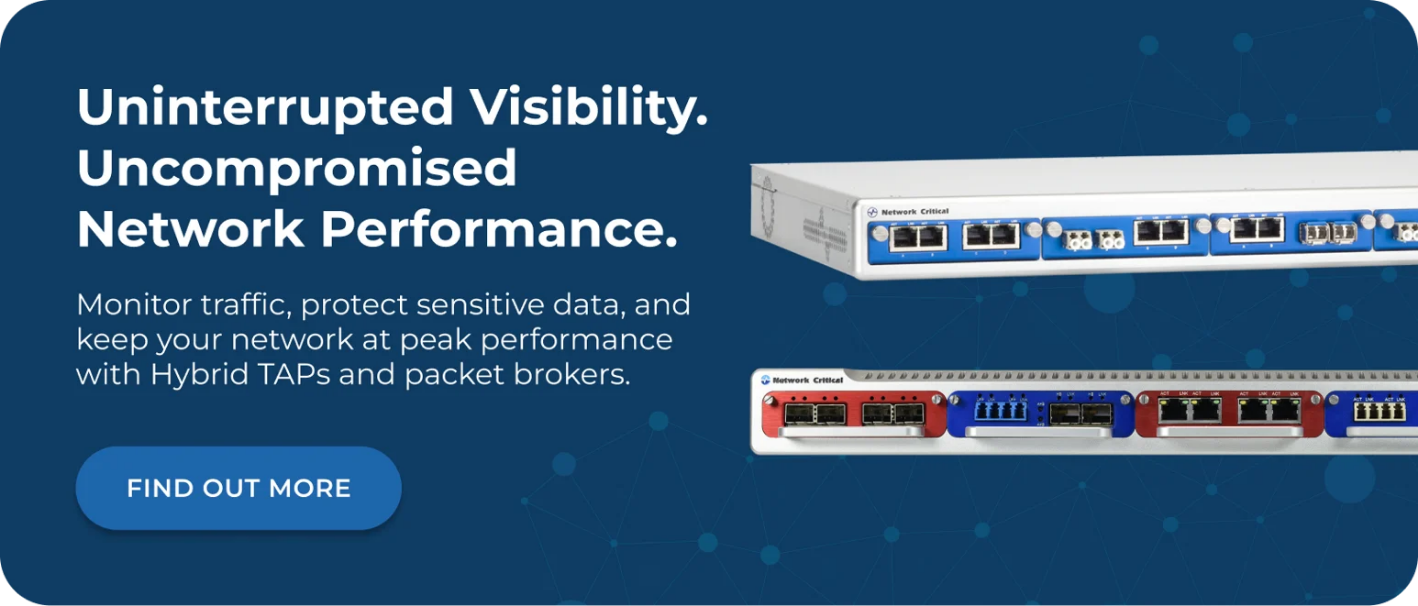
Network Critical brings data diode capability into its existing TAP and packet broker family. The diode is available as a standalone module. It also integrates directly into SmartNA-PortPlus and SmartNA-XL chassis. This hybrid approach lets a single device TAP a link, broker the traffic, and enforce one-way flow.
Network Critical states its data diodes run at sub-1 millisecond latency. The company also cites 99 percent reliability in high-throughput environments. The design is protocol agnostic across IP-based traffic. This avoids the configuration overhead that protocol-specific diodes often introduce. Network Critical positions the diode for military, ICS, and Supervisory Control and Data Acquisition (SCADA) infrastructure. It does not publish independent certification data, such as Common Criteria evaluation, for the diode itself. Buyers should confirm current accreditation status directly with the vendor before specifying it for a classified environment.
Where the diode integrates with the packet broker chassis, operators inherit its network packet broker filtering. The chassis also delivers 1.8 Tbps of non-blocking throughput. Perpetual hardware licensing avoids the recurring subscription costs common among larger incumbents. This matters for government buyers who plan to run the same hardware for a decade or longer.
Proven results:
- State of Maryland: Gained traffic visibility across network layers to satisfy audit requirements
- BP: Centralized OT and IT monitoring across refinery buildings without touching live traffic
- Airbus: Delivered zero-impact monitoring across aircraft test rigs handling mission-critical data
Owl Cyber Defense
Owl Cyber Defense is one of the most established names in cross domain solutions. Its technology is US government accredited and Common Criteria certified. The Talon product line spans the Owl Talon One PCIe card, rated at up to 1 Gbps. Talon Torrent reaches 100 Gbps for backbone-level transfer. Both combine FPGA-based protocol filtering with physical separation. Only well-formed data crosses the boundary.
The OPDS-1000 all-in-one platform supports three configurations. These range from 26 Mbps to 1,000 Mbps in a single 1U rack-mountable unit. Owl also offers the Incident Response Diode. This pocket-sized device is built for digital forensics workflows. It provides one-way USB transfer from compromised endpoints. Owl's diodes align with NIST Risk Management Framework mapping. They also follow DHS, IEC, and NERC CIP-relevant practices.
Garland Technology
Garland Technology is best known as a TAP specialist. Its Hardware Data Diode line extends that portfolio into one-way transfer. The P1GCSSP1X3 regenerates a single SPAN port to three connected monitoring tools at 1G speeds. Physical hardware separation prevents any return path. The Data Diode Network TAP line scales to 100G using SWDM4 optics. Custom split ratios of 60/40, 80/20, or 90/10 are available.
Garland's diodes target critical infrastructure networks such as utility substations, manufacturing facilities, and metro locations. The company positions the product for federal defense and government agencies. This sits alongside its established OT and industrial customer base. Garland does not publish Common Criteria or NCDSMO accreditation for its data diode line. Buyers needing formal cross-domain certification should verify current status before procurement.
BAE Systems
BAE Systems brings defense-grade credibility to cross-domain security through its XTS Diode. It was the first One-Way Transfer device named Raise-the-Bar compliant. This designation comes from the National Cross Domain Strategy Management Office and the National Security Agency. The device reaches up to 40 Gbps throughput in a compact footprint. Forward-error correction is built in to recover messages post-transmission.
XTS Diode integrates with the company's XTS Guard 7 cross-domain solution. This platform supports secure sharing across up to 20 domains in an enterprise chassis. BAE Systems serves defense, intelligence, space, and critical infrastructure customers worldwide. It reports hundreds of documented deployments. The vendor also offers a Small Form Factor tactical variant for eight-domain use cases. This suits deployments aboard airframes and other space-constrained platforms. Public throughput and pricing detail is limited compared to commercial OT diodes. The sales process is typically more consultative and requirements-driven.
Waterfall Security Solutions
Waterfall Security Solutions has built its reputation specifically inside operational technology security. Its flagship WF-600 Unidirectional Security Gateway offers 1Gbps or 10Gbps throughput options. Single or high-availability dual configurations are both available. The gateway replaces one layer of firewalls in an industrial network. It provides a hardware-enforced barrier against remote attacks, malware, and ransomware.
Waterfall's products are Common Criteria certified as unidirectional. The company maintains native connectors for ABB, Siemens, Schneider, Rockwell, and Honeywell platforms. The WF-500 DIN rail model supports space-constrained sites. The Waterfall FLIP allows scheduled reversal of orientation for controlled software updates. Waterfall's documented deployments span energy, water, and manufacturing sites. This makes it a frequent reference point in critical infrastructure procurement.
Advenica
Advenica is a Swedish high-assurance vendor. Its SecuriCDS range is approved by the Swedish Armed Forces up to Top Secret classification. The DD1G Gen 2 is a hardware-only diode offering full gigabit throughput with no configuration options. The company positions this as removing misconfiguration risk entirely. It supports Power over Ethernet for simplified cabling in remote sites.
For higher-speed environments, the DDSFX-10G ships in an SFP form factor for 10 Gbps links. The Advenica Data Diode DD1G has achieved Common Criteria EAL4+ certification. The SecuriCDS DD1000i and DD1000A models carry Swedish national security accreditation. This sits at component assurance level N3. Advenica's diodes serve ICS, SCADA, and defense industry customers needing national-level accreditation.
OPSWAT
OPSWAT positions its MetaDefender Optical Diode around certification depth as much as throughput. The base platform runs at 100 Mbps. It can be field upgraded to 1 Gbps as requirements grow. It carries Common Criteria EAL4+ certification. The DIN rail model also holds Class 1 Division 2 certification. This covers hazardous environments such as oil, gas, and chemical processing sites.
OPSWAT states its one-way transfer mechanism supports NEI, NIST, and other cybersecurity frameworks. This covers both cross-domain IT use cases and OT environments like SCADA and DCS. The C1D2 certification is a distinctive feature among the vendors compared here. It addresses explosive-atmosphere safety requirements that IT-focused diodes rarely need to meet.
How to Choose the Right Data Diode for Your Network
Selecting a data diode is not just a throughput exercise. The right choice depends on your compliance obligations and deployment environment. It also depends on how the device fits your existing visibility architecture.
Throughput and Traffic Volume
Match the diode's rated throughput to your actual data volume, not your link speed. A diode replicating SCADA historian data rarely needs more than 1 Gbps. Backbone log aggregation may require 40G or 100G capacity instead. Overbuying throughput adds cost without adding security value.
Certification and Accreditation Depth
Government and defense buyers often need a specific accreditation. Examples include NCDSMO Raise-the-Bar compliance or Common Criteria EAL4+. Commercial OT buyers may only need a vendor statement of NIST or IEC 62443 alignment. Confirm which level your compliance framework actually mandates first.
Deployment Environment
Hazardous locations with combustible gases or dust require specific safety certifications. These are separate from cybersecurity certifications. Space-constrained sites such as substations benefit from DIN rail or compact form factors. Full rack units are not always practical in these locations.
Integration With Existing Visibility Infrastructure
A diode that integrates with your network TAPs or packet broker reduces rack complexity. This matters most in OT and edge environments with constrained power and space. A combined TAP-plus-diode chassis lowers deployment risk in these settings.
Total Cost of Ownership
Some vendors price data diodes with perpetual hardware licensing. Others bundle in software subscriptions for management and content filtering. Model the three-year cost of each option before comparing sticker prices. Include support renewals and any per-domain licensing fees in that comparison. High-assurance government models often carry accreditation and audit costs beyond the hardware price.
Vendor Support and Longevity
Cross-domain deployments often run for a decade or more without replacement. Prioritize vendors with a demonstrated track record in OT cybersecurity. Look for documented long-term customers over newer entrants without an established base. Also confirm the vendor's response times for critical support tickets. A four-hour severity-one SLA matters more once the diode is protecting production traffic.
Frequently Asked Questions
What Is a Data Diode?
A data diode is a hardware device that physically enforces one-way data flow. It allows data to leave a secure network but cannot receive data back. This hardware enforcement distinguishes it from a firewall, which relies on software rules. Those rules can be misconfigured or bypassed.
Is a Data Diode the Same as a Cross-Domain Solution?
No, a data diode is the hardware component. A cross-domain solution typically combines a diode with software that replicates protocols. That software also filters content and manages policy across classification levels. Vendors such as BAE Systems and Owl Cyber Defense sell both the diode and the broader guard software.
Does NIST Require Data Diodes for Cross-Domain Transfer?
NIST guidance recognizes unidirectional gateways as a hardware-and-software combination. The hardware cannot send information back to the source network. NIST does not mandate a specific brand. Many agencies still specify hardware-enforced separation to meet Risk Management Framework requirements.
Can a Data Diode Support Both IT and OT Compliance Frameworks?
Yes, several vendors design diodes to support both. A device certified for IEC 62443 segmentation in an industrial environment may also carry Common Criteria certification. This can extend to OT cybersecurity and cross-domain IT deployments alike. It depends on the specific model and configuration purchased.
How Much Does a Data Diode Cost?
Pricing varies widely based on throughput and certification level. It also depends on whether the device is standalone or integrated into existing TAP or packet broker hardware. Entry-level 1G diodes typically cost less than high-assurance 40G or 100G models with formal accreditation.
Do I Need a Data Diode If I Already Use a Firewall?
A firewall alone does not meet the assurance bar for high-consequence OT or classified environments. Firewalls are software-based and can be misconfigured or exploited. A data diode physically removes the return path at the hardware level.
Build Your Cross-Domain Architecture With Network Critical
Choosing a data diode is a long-term security decision, not a line-item purchase. Network Critical's hybrid approach lets you deploy a standalone diode today. You can integrate it directly into the 100gb smartna portplus packet broker platform as your monitoring needs grow. Perpetual licensing keeps costs predictable across a decade-long deployment. It also avoids the subscription creep common among larger incumbents.
Drag-n-Vu configuration and a tool-agnostic architecture feed any SIEM, NDR, or analysis platform you choose. Network Critical gives your team a single vendor relationship for TAP, packet broker, and one-way transfer needs. Speak to the Network Critical team to review your compliance requirements and deployment environment.