Top 7 Data Diodes for DORA Financial Resilience in 2026
Financial entities operating under the Digital Operational Resilience Act (DORA) face a specific network security problem. They must prove one-way data separation between trading systems, market data feeds, and lower-trust networks. A data diode solves this at the hardware level. It enforces unidirectional flow so information can leave a secure segment but never re-enter it. This holds true regardless of software policy or configuration error.
DORA's ICT risk management requirements push financial institutions toward provable network segmentation, not just documented intent. A hardware-enforced one-way link gives auditors physical evidence of separation. A firewall rule set cannot match that evidence. This guide compares seven data diode vendors relevant to financial services network architects planning DORA compliance projects in 2026.
Data Diode Vendor Comparison for Financial Resilience
| Vendor | Key Feature or Strength | Max Throughput |
|---|---|---|
|
Data diode capability built into existing TAP and packet broker hardware |
Up to 100G |
|
|
FPGA-based protocol filtering diodes with defense-grade accreditation history |
Up to 100 Gbps |
|
|
Hundreds of native SCADA and OT connectors for unidirectional gateways |
Up to 10 Gbps |
|
|
Common Criteria EAL 7+ certified cross-domain solution heritage |
Up to 40 Gbps |
|
|
Hardware-only diode with no configuration options to misconfigure |
Up to 10 Gbps |
|
|
EAL4+ and C1D2 certified, mapped to NERC CIP and IEC 62443 |
Up to 10 Gbps |
|
|
Purpose-built data diode TAPs for SPAN link protection |
Up to 1G |
Network Critical
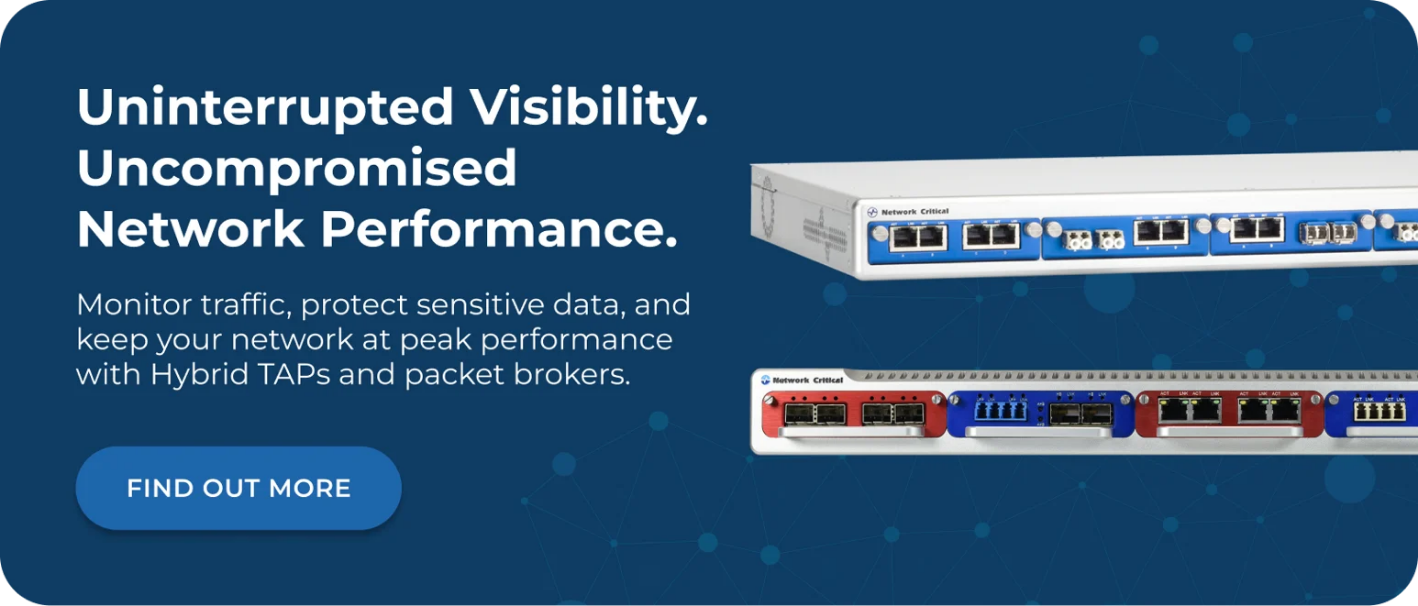
Network Critical builds data diode capability directly into its existing TAP and packet broker portfolio. It does not sell the diode as an isolated appliance. The data diode is available as a standalone hardware module. It also integrates into SmartNA-PortPlus and SmartNA-XL systems. A financial services team already running Network Critical infrastructure can add unidirectional protection without a separate vendor stack.
The data diode enforces one-way data flow at the hardware level. There is no software interface for an attacker to exploit. It operates with sub-millisecond latency. It supports all IP-based protocols without extra configuration or translation. This protocol-agnostic design matters for institutions running trading applications, market data feeds, and legacy monitoring tools side by side. All of these need to reach a lower-trust segment safely.
Deployment options extend the diode across network TAPs and packet brokers already in place. This avoids a rip-and-replace project. Drag-n-Vu management software gives network administrators one interface for TAPs, brokers, and diode-protected links. There is no separate one-way transfer console to learn.
Proven results:
- HSBC: Achieved zero latency on monitoring technologies for real-time financial updates across a global network
- BP: Enabled centralised monitoring of critical operational systems without impacting live production traffic
- State of Maryland: Deployed SmartNA-XL to support secure unified communications monitoring across government networks
Owl Cyber Defense
Owl Cyber Defense is one of the most recognised names in the data diode market. It has deep roots in US defense and intelligence community deployments. Its DualDiode Communication Cards and Protocol Filtering Diodes (PFDs) combine hardware-enforced one-way transfer with FPGA-based inspection. That inspection works at the field, message, and application level. Throughput scales up to 100 Gbps, putting Owl at the high end of the market for large data volumes.
Owl's PFDs filter traffic in real time rather than simply passing it through. Each packet is inspected before it reaches the lower-trust network. Malformed or unauthorised content gets blocked while one-way assurance is preserved. This suits financial institutions that need to export monitoring data or logs while filtering out unwanted content. Owl's range covers hardware diodes and software-augmented unidirectional gateways, supporting UDP, TCP, and serial communications.
Owl's accreditation history with the US Department of Defense gives it a strong assurance pedigree. Commercial financial deployment specifications are less publicly documented than its government-focused literature. This is worth confirming directly with Owl during procurement.
Waterfall Security Solutions
Waterfall Security Solutions invented the unidirectional security gateway category. It remains strongest in OT-heavy environments such as energy, water, and manufacturing. Its WF-600 platform offers 1 Gbps or 10 Gbps throughput options. Standard high-availability configurations and copper or fiber connectivity are included. The gateway is controlled through a web-based interface rather than command-line configuration.
Waterfall's differentiator is its connector library. It includes native support for ABB, AVEVA, Emerson, GE, Honeywell, and hundreds of other industrial control platforms. For a financial institution with OT-adjacent infrastructure, such as building management systems, this protocol depth can simplify integration. The company positions its gateways as a direct alternative to a layer of firewalls at the OT perimeter.
Waterfall's core customer base sits in critical infrastructure and manufacturing. It is not built primarily around financial services trading environments. Buyers should confirm connector support for financial-specific monitoring tools before committing.
BAE Systems
BAE Systems brings cross-domain solution heritage from decades of defense and intelligence work. This experience underpins its Data Diode Solution and XTS Diode product lines. The Data Diode Solution is Common Criteria EAL 7+ certified. It is also approved under the National Cross Domain Strategy Management baseline, one of the highest assurance levels available. The XTS Diode delivers throughput of up to 40 Gbps in a compact form factor.
BAE Systems converts data into sequenced UDP packets for transfer across the diode. The receiving side then reconverts the broadcast to its original format. Forward-error correction ensures messages remain recoverable after transmission. This addresses a common data assurance gap in one-way transfer devices. The product supports files, streaming data, and email including attachments.
This level of certification typically carries a commercial and implementation cost profile suited to large enterprises. Government-adjacent financial institutions are a better fit than smaller regional banks. Procurement timelines and professional services requirements should be scoped early.
Advenica
Advenica is a Swedish vendor whose SecuriCDS and DD1G product lines emphasise simplicity through hardware-only design. The DD1G Gen 2 is a hardware-only diode with no configuration options. The company argues this removes the risk of misconfiguration entirely. It recently achieved Common Criteria EAL4+ certification. The DDSFX-10G variant extends throughput to 10 Gbps in an SFP form factor.
Advenica's customer base leans heavily toward European national authorities. It also serves operators of essential infrastructure, including electricity and water utilities. This European regulatory alignment matters for institutions operating under both DORA and national critical infrastructure frameworks at once. Customers needing bidirectional application support can pair the hardware diode with the Advenica Data Diode Engine. This standalone proxy layer manages file transfer without compromising the one-way guarantee.
Advenica's product literature is strongest on government and critical infrastructure use cases. Financial services buyers should request sector-specific reference deployments during evaluation.
OPSWAT
OPSWAT positions its MetaDefender Optical Diode and MetaDefender NetWall family around compliance breadth. The product line is Common Criteria EAL4+ certified. The DIN rail model carries Class 1 Division 2 certification for hazardous environments. Throughput scales from 100 Mbps to 10 Gbps across the NetWall family, depending on configuration.
OPSWAT maps its diode products against NERC CIP, IEC 62443, NIST 800-82, and CFATS frameworks. This makes it a frequent shortlist candidate for organisations juggling multiple compliance regimes. The company documents deployments protecting refinery control networks from corporate IT. This shows real-world OT segmentation experience beyond financial services specifically.
For a DORA compliance project, this multi-framework documentation can shorten internal audit preparation. Financial institutions should verify that OPSWAT's compliance mapping addresses DORA-specific evidentiary requirements directly. The current mapping is built primarily around US and OT-focused standards.
Garland Technology
Garland Technology offers a hardware data diode TAP line built around 10/100/1000M network speeds. The product line focuses on SPAN port protection. It enforces one-way data flow for SPAN links through physical hardware separation. The goal is regenerating and aggregating SPAN traffic into monitoring tools without any return path. Garland states plainly that there are no hidden fees or subscriptions on its hardware.
The product is positioned for critical infrastructure networks such as utility substations, manufacturing facilities, and metro locations. High-throughput financial trading environments sit outside its primary focus. Its 1 Gbps ceiling limits its fit for data centre-scale financial services deployments moving larger monitoring volumes.
Garland's strength lies in straightforward SPAN protection at accessible price points. This suits smaller branch or back-office segments within a larger DORA compliance programme. It is less suited to core trading infrastructure.
Selecting the Right Data Diode for DORA Compliance
Choosing a data diode for a DORA compliance project differs from selecting a firewall. You are buying physical enforcement, not a configurable policy engine. Decision criteria shift toward certification fit, throughput headroom, and how the diode sits alongside your visibility stack.
Certification and Regulatory Alignment
Confirm the diode carries certification relevant to your regulatory environment, such as Common Criteria EAL4+ or higher. DORA does not mandate a specific certification scheme. Auditors do respond well to independently verified assurance levels. Ask each vendor for documentation mapping their certification to DORA's ICT risk management articles. Do not assume general critical infrastructure credentials transfer automatically.
Throughput and Protocol Support
Match the diode's rated throughput to your actual data volume, not your network's overall link speed. A trading floor generating gigabytes of market data per hour needs a different diode than a back-office batch reporting system. Consider whether the diode needs to support:
- Standard IP-based protocols without translation
- Specific application protocols used by your monitoring or SIEM tools
- File transfer alongside streaming telemetry
Deployment Complexity and Existing Infrastructure Fit
A standalone data diode appliance adds another device, console, and vendor relationship to your environment. Where a network TAP or packet broker already sits in your architecture, adding diode capability reduces deployment time. It also cuts the number of interfaces your team must learn. This matters for DORA's operational resilience testing, since fewer moving parts mean fewer things that can fail during a test.
Total Cost of Ownership
Compare licensing models carefully. Perpetual hardware licensing avoids the per-port fees and forced upgrade cycles built into some subscription-based gateway platforms. Factor in professional services costs for high-assurance products. EAL7-level certification often comes with implementation support requirements that add to total project cost.
Vendor Support and Long-Term Viability
A hardware device with no software interface to patch sounds low-maintenance. You still need a vendor who can support the deployment over its operational life. Check the vendor's track record in financial services specifically, not just government or OT deployments. Evidentiary requirements and audit expectations differ between sectors.
Frequently Asked Questions
What Is a Data Diode?
A data diode is a hardware device that physically enforces one-way data flow between two networks of differing trust levels. Unlike a firewall, it has no software interface to misconfigure or exploit. The enforcement happens at the physical layer. Data diodes commonly move monitoring, log, or telemetry data out of a secure network without creating a return path.
How Does DORA Affect Financial Services Network Security?
DORA requires financial entities to demonstrate provable ICT risk management, including network segmentation between critical systems and lower-trust environments. Auditors increasingly look for hardware-enforced evidence of separation rather than software policy documentation alone. This has pushed data diodes into scope for compliance projects that previously relied only on firewalls and access control lists.
What Is the Difference Between a Data Diode and a Firewall?
A data diode enforces one-way communication at the hardware level. Firewalls use software rules that can be misconfigured or exploited. Firewalls remain useful for bidirectional traffic control, but they cannot offer the same physical guarantee against reverse data flow. Many high-assurance environments use both, with the diode protecting the most sensitive segment.
Can a Data Diode Be Integrated With Existing Network TAPs?
Yes, some vendors build data diode functionality directly into existing TAP and packet broker hardware. This avoids requiring a separate appliance. It reduces the number of devices and management interfaces a network team must maintain. It also shortens deployment time since the underlying infrastructure is often already in place.
How Much Does a Data Diode Cost?
Data diode pricing varies widely by throughput, certification level, and deployment model. Costs range from a few thousand pounds for a basic gigabit diode. EAL7-certified cross-domain solutions with professional services cost far more. Perpetual hardware licensing models typically avoid the recurring subscription fees found in some gateway platforms. Request quotes from shortlisted vendors based on your specific throughput and certification requirements.
Do Financial Institutions Need Data Diodes for DORA Compliance?
DORA does not name data diodes specifically as a mandatory control. It does require demonstrable segmentation between critical ICT systems and lower-trust networks. A hardware-enforced data diode is one of the strongest available methods for proving that separation to auditors. Institutions with the highest-risk segments, such as trading infrastructure or payment processing, are most likely to find data diodes relevant.
Build Your Data Diode Strategy With Network Critical
DORA compliance projects reward architectures that reduce complexity rather than add another isolated appliance. Network Critical's approach builds data diode capability into existing TAP and packet broker hardware. Financial institutions get hardware-enforced segmentation without a separate vendor relationship or console to manage.
This fits within Network Critical's broader cost structure advantage. Perpetual licensing avoids the subscription surprises common among incumbent visibility vendors. Drag-n-Vu deployment typically completes in under two hours. A hybrid TAP-plus-broker architecture in a single chassis reduces the change-management surface area that DORA's resilience testing scrutinises closely.
Explore the full range of hybrid TAP and packet broker solutions to see how data diode capability fits your architecture. To discuss your specific DORA compliance requirements, speak to the Network Critical team.