




<img src="https://secure.leadforensics.com/97241.png" style="display:none;">

Zero trust network monitoring for government and defense

Network Critical provides zero trust network monitoring for government and defense agencies running distributed networks that must prove continuous compliance, not periodic snapshots.

Network teams at these organisations run Network Critical visibility

  • Vodafone Logo
  • HSBC Logo
  • bp logo
  • Airbus Logo
  • Darktrace Logo

Continuous, verifiable visibility for Zero Trust programs

Government and defense networks are under growing pressure to prove Zero Trust Architecture compliance continuously, not just at audit time. Zero trust network monitoring for government and defense agencies means capturing East-West and North-South traffic at line rate, mapping policy-based access paths, and generating an audit trail that survives scrutiny from federal and national auditors. Agencies migrating legacy TDM voice services to IP face the same visibility gap during transition. The State of Maryland Department of Information Technology addressed this directly, deploying Network Critical's SmartNA-XL to maintain quality of service and security visibility while migrating from TDM to IP across its unified communications network, without losing sight of traffic mid-migration.

 Key challenges facing government and defense agencies 

Zero Trust verification without continuous evidence
Zero Trust Architecture mandates such as US EO 14028 and UK NCSC guidance require continuous verification, not a one-time audit. Network Critical's INVIKTUS provides policy-based, invisible network presence that proves access controls are enforced every second, not just on inspection day.
TDM to IP migration complexity
Agencies migrating legacy TDM voice services to IP-based communications risk losing visibility mid-transition. Network Critical's SmartNA-XL captures traffic across the full range of protocols and data types during migration, so performance and security issues surface immediately rather than after go-live.
Compliance audit evidence gaps
Auditors increasingly demand continuous capture and RADIUS or TACACS+ authenticated audit trails, not sampled traffic. Network Critical's SmartNA-PortPlus supports RADIUS and TACACS+ authentication, authorization, and accounting, giving agencies a defensible audit trail without adding engineering overhead.
Distributed agency networks defeat single-purpose tools
Government and defense networks span multiple sites, procurement cycles, and legacy protocol mixes. Aggregating traffic from distributed locations to a shared set of monitoring tools, rather than buying a tool per site, is essential to keeping visibility budgets under control as agencies scale.

Why government and defense teams come to Network Critical 

We're launching a Zero Trust Architecture program and need continuous, provable verification.

We're migrating from TDM voice to IP and can't afford a visibility blind spot. 

We failed an audit because monitoring data had gaps we could not explain. 

We're consolidating tools across distributed agency sites and can't keep paying per port. 

We had a SOC escalation about traffic nobody could confirm was ever captured.

We're renewing a framework contract and want vendor-neutral, tool-agnostic visibility. 

Key capabilities for government and defense agencies 

Zero trust segmentation with invisible network presence

Network Critical's INVIKTUS has no IP or MAC address, so it remains completely undetectable while enforcing policy-based access at full line rate. Agencies map one visible path for authorized users and keep the rest of the network invisible to everyone else. 

Scale-out packet visibility without forklift upgrades

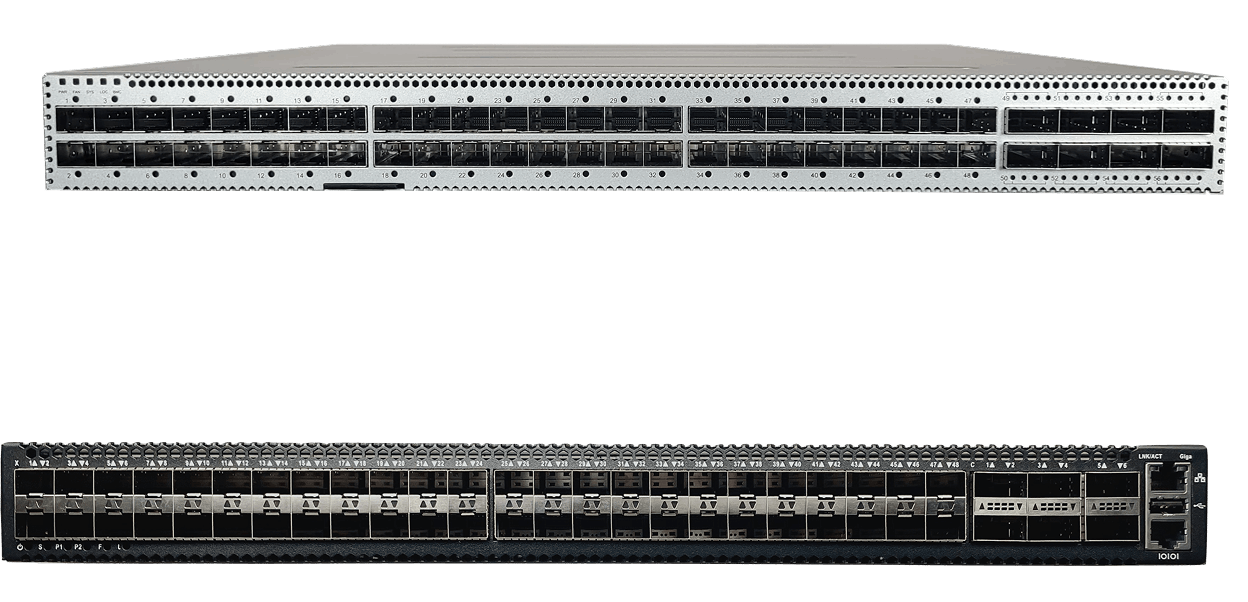
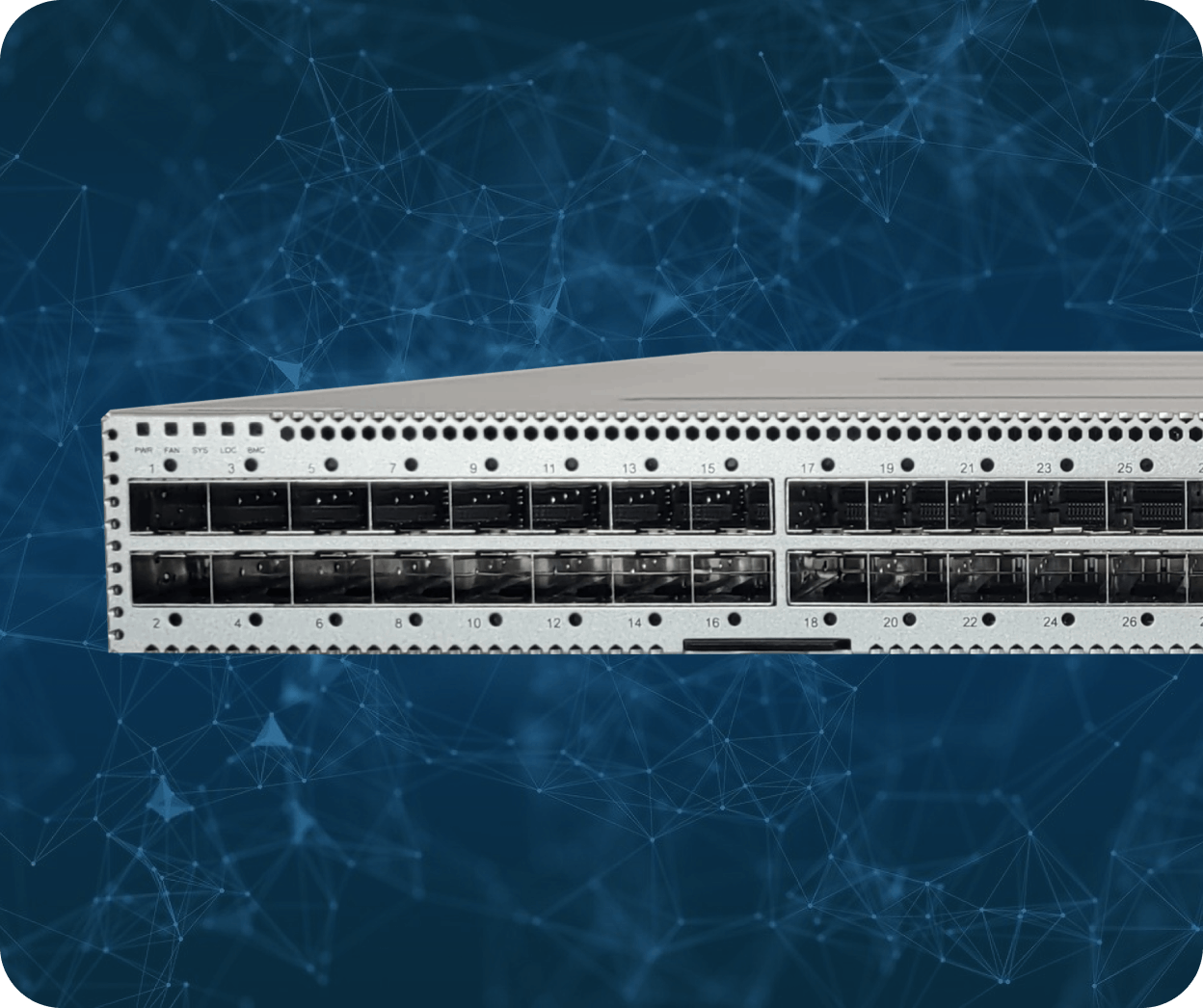
SmartNA-PortPlus scales from a 48-port base unit to 194 ports of 1G, 10G, 25G, 40G, and 100G visibility in a single 1RU chassis, letting agencies add capacity as networks grow instead of replacing hardware. 

Compliance-grade capture with authenticated audit trails

RADIUS and TACACS+ authentication, authorization, and accounting on SmartNA-PortPlus give agencies a defensible record of who configured what, when, satisfying auditors who demand accountability alongside raw traffic capture. 

Drag-n-Vu unified management across distributed sites

Drag-n-Vu's drag-and-drop interface lets network administrators configure filtering, aggregation, and port mapping without specialist engineering support, cutting deployment time and routine maintenance overhead across geographically distributed agency networks and remote sites. 

Best zero trust network monitoring solution for government and defense 

Government and defense agencies need a Zero Trust layer that auditors can verify continuously, paired with visibility infrastructure that scales across distributed sites without forklift replacement or per-port licensing surprises.

INVIKTUS: zero trust protection for government and defense networks

  • Invisible in the network: no IP or MAC address, undetectable to intruders
  • Unhackable by design: a system cannot be attacked if it cannot be seen
  • Lock and Leave: policy-based configuration that runs with minimal ongoing maintenance
  • Full line-rate performance with zero added latency
  • Policy-based access paths that map one route for authorized users only
  • Pairs with SmartNA-PortPlus for aggregation across up to 194 ports of 1G to 100G visibility
  • Complements RADIUS and TACACS+ authentication for a full audit trail
  • Perpetual licensing with no recurring per-seat fees
SmartNA-PortPlus on blue background
person typing on futuristic laptop

When INVIKTUS is the right fit

  • You're standing up a Zero Trust Architecture program and need continuous, policy-based verification rather than a periodic audit, backed by INVIKTUS
  • You're migrating legacy TDM voice services to IP and cannot accept a visibility gap during the transition
  • You need RADIUS and TACACS+ authenticated audit trails that satisfy federal and national compliance reviews
  • You're consolidating monitoring across distributed agency sites and want to avoid per-port licensing as you scale

Case studies: zero trust network monitoring for government and defense

State of Maryland Department of IT

Migrating from TDM voice to IP services, Maryland's Department of Information Technology deployed Network Critical's SmartNA-XL across five 1/10/40G slots to maintain quality of service and security visibility throughout the transition. The deployment supported compliance auditing and let the team test new services without losing sight of live traffic. 

Read more

Darktrace

Darktrace integrates its AI threat detection platform with Network Critical's SmartNA-PortPlus using an API-driven connection, giving security operations teams autonomous traffic control and full-fidelity feeds for anomaly detection. The same architecture applies to government SOC environments running East-West visibility programs across consolidated agency networks. 

Read more
State-of-Maryland


Network tools like the Network Critical SmartNA-XL™ enables the State to maintain the QoS and QoE of our UC network." 

 —  UC Platform Manager, State of Maryland Department of IT 


Why SPAN ports fail for government and defense agencies 

SPAN cannot deliver continuous Zero Trust verification

SPAN offers a point-in-time mirror of traffic, not the continuous, policy-enforced access path Zero Trust Architecture mandates require. Network Critical's INVIKTUS enforces policy-based access at full line rate, giving auditors ongoing proof of enforcement instead of a snapshot. 

SPAN drops packets exactly when audit trails matter most

SPAN ports deprioritize mirrored traffic under load, dropping packets during the peak events auditors and incident responders most need captured. Network Critical's SmartNA-PortPlus captures at full line rate, so compliance evidence survives the exact moments SPAN loses it. 

SPAN scales poorly across distributed agency sites

Extending SPAN monitoring to every distributed agency location means new switch capacity and configuration at each site. Network Critical's scale-out chassis architecture adds visibility capacity at a shared aggregation point instead of forcing a forklift upgrade at every location. 

Why choose Network Critical for zero trust network monitoring

Network Critical delivers enterprise-grade visibility without enterprise pricing or complexity. Perpetual hardware licensing with transparent pricing means no per-port licensing surprises and no forced subscription renewals, typically 40 to 60 percent lower over three years than traditional packet broker vendors. Network Critical's INVIKTUS and SmartNA-PortPlus work together to give government and defense agencies continuous Zero Trust verification and scale-out visibility from a single vendor, managed through Drag-n-Vu's single pane of glass.

With over 20 years of experience, UK manufacturing, and global 24/7 support, Network Critical's solutions are proven across government, telecom, energy, and financial services. The State of Maryland Department of Information Technology trusted Network Critical through a TDM to IP migration, Vodafone relies on Network Critical across four generations of network links, and BP protects multi-building refinery operations the same way government agencies protect classified and unclassified segments.

Frequently asked questions about zero trust network monitoring for government and defense 

  • Zero trust network monitoring for government and defense agencies is continuous, policy-based visibility into network traffic that proves Zero Trust Architecture controls are enforced in real time, not just at audit time. Network Critical delivers this through INVIKTUS paired with line-rate packet capture across distributed agency networks. 
  • SPAN ports mirror traffic on a best-effort basis and drop packets under load, exactly when auditors need proof of continuous enforcement. Zero Trust programs require policy-based, always-on verification, which dedicated network TAPs and packet brokers provide at full line rate without the sampling gaps SPAN introduces. 
  • INVIKTUS is Network Critical's zero trust cybersecurity system, built on three pillars: invisible (no IP or MAC address), unhackable (a system that cannot be seen cannot be attacked), and Lock and Leave (policy-based configuration that runs with minimal ongoing maintenance). 
  • INVIKTUS sits in front of sensitive systems with no IP or MAC address, so it remains undetectable to intruders while enforcing a single policy-based access path for authorized users. Because it introduces no active device signature, INVIKTUS adds zero trust segmentation without creating a new point of failure. 

  • SmartNA-PortPlus aggregates traffic from up to 194 ports of 1G, 10G, 25G, 40G, and 100G links into a single 1RU chassis, feeding monitoring and security tools full-fidelity traffic. Agencies scale visibility by adding expansion units instead of replacing existing hardware. 
  • The Maryland Department of Information Technology used Network Critical's SmartNA-XL to maintain quality of service and security visibility while migrating from TDM voice to IP services, capturing traffic across the full range of protocols so issues surfaced immediately rather than after go-live. 
  • Yes. SmartNA-PortPlus supports RADIUS and TACACS+ authentication, authorization, and accounting, giving agencies a defensible record of configuration changes alongside continuous traffic capture, satisfying auditors who require accountability, not just raw packet data from a single audit window. 

  • Yes. Network Critical's SmartNA-PortPlus and Passive Fiber Optical TAPs deliver standard PCAP output to any SIEM, NDR, or analysis platform an agency already runs, without locking agencies into a single vendor's proprietary analytics stack or dashboard. 
  • Drag-n-Vu replaces manual, command-line configuration with a drag-and-drop interface for filtering, aggregation, and port mapping. Network administrators configure tool access across distributed sites without needing specialist engineering support for routine changes or maintenance windows. 
  • SmartNA-PortPlus supports RADIUS and TACACS+ authentication, authorization, and accounting protocols, letting agencies track exactly who configured what and when. This closes the audit trail gap that generic switch-based monitoring, including SPAN, typically leaves open. 

  • Network Critical uses perpetual hardware licensing rather than a subscription model, running roughly 40 to 60 percent lower over three years than traditional packet broker vendors. Agencies avoid per-port licensing surprises and forced upgrade cycles tied to subscription renewals. Talk to sales for a budget comparison. 
  • A Zero Trust Architecture mandate, a failed compliance audit, a TDM to IP migration, or a SOC escalation over unverifiable East-West traffic are the clearest signals. Each exposes a gap that dedicated TAPs and packet brokers close and SPAN cannot.