




<img src="https://secure.leadforensics.com/97241.png" style="display:none;">

Network TAPs for data center monitoring

Network Critical provides network TAPs for data center monitoring running scale-out packet broker architectures from 1G to 400G. They replace SPAN as the access layer feeding your monitoring and security stack.

Network teams at these organisations run Network Critical visibility

  • Vodafone Logo
  • HSBC Logo
  • bp logo
  • Airbus Logo
  • Darktrace Logo

How data centers use network TAPs and packet brokers for monitoring

Data center operators connect network TAPs ahead of every monitoring and security tool because SPAN ports were built for switch diagnostics, not for line-rate forensic capture. As racks fill with IDS, NDR, and SIEM appliances, the constraint shifts from "can we see the traffic" to "can we afford a dedicated tool per link." A scale-out packet broker sits between the TAP layer and the tool stack, aggregating, filtering, and load balancing east-west and north-south traffic so fewer tools can see more of the fabric without forcing a forklift upgrade every time port count or speed grows.

 Key challenges facing data center monitoring teams 

East-west traffic stays invisible once it is inside the fabric
Switch SPAN sessions were designed for north-south visibility and degrade fast under modern east-west volumes. Network Critical's network TAPs capture every packet between racks and tiers, so lateral movement, replication traffic, and inter-service calls stop being a blind spot for the SOC and the NOC alike.
Port count keeps outpacing the budget for monitoring tools
Buying a dedicated security or monitoring appliance for every live link does not scale economically as a facility grows. A network packet broker aggregates many lower-speed links onto fewer high-capacity tool ports, protecting the existing tool investment as the rack count climbs.
Inline tools risk taking down live traffic
IPS, DDoS mitigation, and other inline appliances introduce a single point of failure if they hang or restart. Bypass TAPs detect a tool failure and automatically reroute traffic, keeping production flowing while the appliance recovers.
MTTR is now a board-level metric, not just a NOC metric
SLA penalties on outages mean every minute of root-cause analysis without full packet capture is a minute the business is losing money. Tool-agnostic PCAP output shortens the path from alert to root cause because the evidence is already complete.

Why data center teams come to Network Critical 

We give your NOC and SOC the same packet, not a sampled copy, so root cause analysis starts from facts instead of guesswork.

 We scale from 1G to 400G in one chassis family, so a capacity upgrade does not mean replacing the visibility layer too. 

 We aggregate many links onto fewer tool ports, so monitoring budget grows with traffic, not headcount. 

 We hand network admins a drag-and-drop GUI, so deployment does not depend on a specialist engineer's calendar. 

 We protect inline security tools with automatic bypass, so a single appliance failure never takes down live traffic. 

 We price hardware once with no recurring per-port licence, so renewal season stops being a budget surprise. 

Key capabilities for data center monitoring 

Scale-out port density from 48 to 256 ports

 SmartNA-PortPlus and the HyperCore variant scale from a 48-port 1RU base unit up to 194 or 256 ports across multiple chassis, so port budget grows with the facility instead of forcing a new platform purchase. 

Non-blocking throughput at line rate

 A 1.8 Tbps backplane on SmartNA-PortPlus, rising to 25.6 Tbps on HyperCore, means aggregation and filtering never become the bottleneck between the network and the tool stack, even at peak east-west load. 

API-driven automation for SOC tooling

 An integrated API supporting HTTP and JSON lets security platforms write their own filtering and port-mapping rules directly into the packet broker, removing manual reconfiguration every time a detection tool needs a different view of traffic. 

Single-pane management across the whole estate

 Drag-n-Vu gives network admins one GUI to configure TAPs and packet brokers across every chassis in the facility, cutting typical deployment time to under two hours per the channel partner criteria in NWC's own field data. 

Best network TAPs for data center monitoring solution 

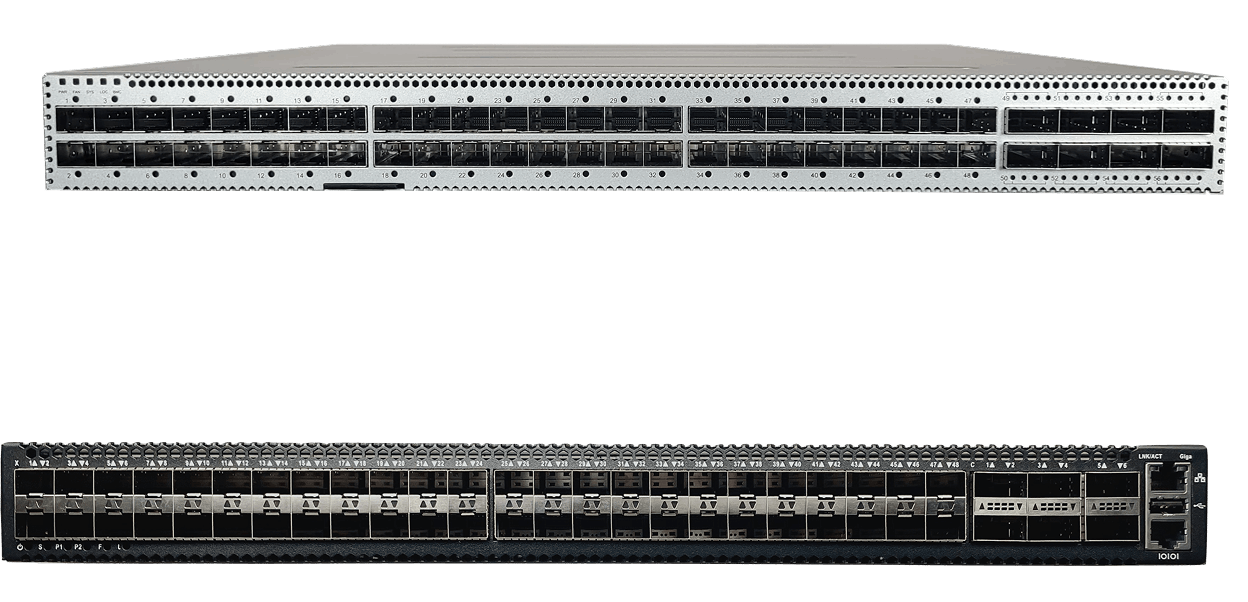
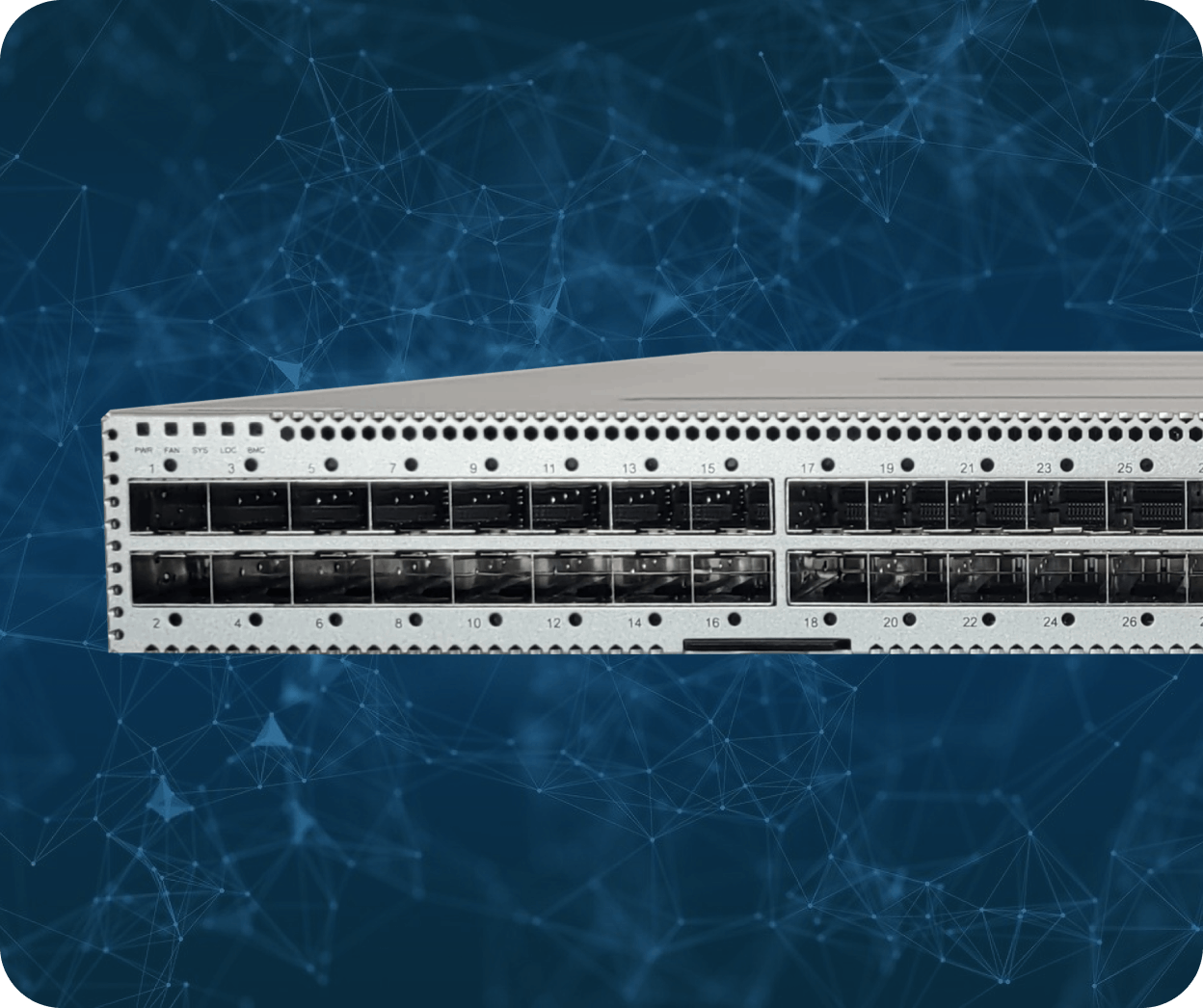
SmartNA-PortPlus

For data centers consolidating monitoring tools onto a scale-out packet broker, SmartNA-PortPlus is the right starting platform.

  • 48 x 1/10G ports plus 6 x 40/100G ports in the base unit, upgradable to 48 x 1/10/25G plus 8 x 40/100G
  • Scales from 1RU to 5RU, multiplying port count up to 194 total ports
  • 1.8 Tbps non-blocking throughput at full line rate
  • Aggregation, filtering, load balancing, and port mapping in a single chassis
  • Integrated API supporting HTTP and JSON for direct tool-to-broker automation
  • Managed through the Drag-n-Vu web GUI, CLI over SSH, or SNMP v1/v2c/v3
  • Dual hot-swappable AC or DC power supplies
  • MTBF rated above 582,692 hours on the SNA-PP 6000 base unit
SmartNA-PortPlus on blue background
person typing on futuristic laptop

When SmartNA-PortPlus is the right fit

  • You are aggregating dozens of 1G and 10G links onto fewer 40G or 100G monitoring tools and need the math to work without buying a tool per link
  • You are running an API-driven SOC stack (NDR, AI threat detection) that needs to control its own filtering and port mapping without manual reconfiguration
  • You are scaling a single facility's port count over time and want a platform that grows by adding chassis, not by replacing the visibility layer
  • You need single-pane management across every TAP and packet broker in the estate rather than per-device configuration

Case studies: network TAPs for data center monitoring

Darktrace

Darktrace integrated its AI-driven threat detection platform with SmartNA-PortPlus's API, letting the tool autonomously control filtering and port mapping as it learns normal traffic patterns. The integration removed manual reconfiguration from the detection workflow entirely. 

Read more

Bourne Leisure

Facing a mix of copper and fiber links across multiple data centers, Bourne Leisure deployed SmartNA-XL to aggregate eight 1Gbps links onto a single 10Gbps security tool per site, an 8x configuration that cut CAPEX on tool purchases while protecting customer financial data. 


Read more
Bourne-Leisure


We chose the Network Critical equipment because of its flexibility to connect different types of live links to a space saving 1RU system and aggregate multiple links to a single tool. 

 —   Head of Network Architecture, Bourne Leisure 


Why SPAN ports fail for data center monitoring 

SPAN drops packets exactly when east-west traffic spikes

SPAN sessions were never built to mirror modern east-west volumes at line rate. Under load, switches silently drop mirrored packets rather than the live traffic, so the NOC and SOC are working from an incomplete copy precisely during the incident that matters most. 

SPAN cannot scale to 100G and 400G without a forklift upgrade

Legacy SPAN configurations max out well below the throughput a data center refresh demands. Facilities stuck on 10G or 40G SPAN sessions cannot monitor a modern fabric at line rate, leaving a growing blind spot as capacity expands. 

SPAN contention forces a queue for every new monitoring tool

Switches offer a finite number of SPAN sessions, so adding a new packet broker or security tool means competing for a scarce resource. A dedicated TAP layer removes that contention entirely, letting tools attach without touching switch configuration. 

Why choose Network Critical for network TAPs in the data center

Network Critical's data center segment carries one of the company's strongest win rates, built on a straightforward economic argument: scale-out network TAPs and packet brokers deliver the same packet-level fidelity as enterprise incumbents at a meaningfully lower three-year cost, without a subscription that resets every renewal cycle.

Where Gigamon and Keysight bundle visibility into per-port licensing and annual subscription fees, Network Critical sells perpetual hardware with predictable support costs, which is the conversation customers are actively having the moment their existing contract comes up for renewal. The Darktrace integration shows what that architecture looks like in practice for an API-driven SOC stack, while Bourne Leisure shows the same aggregation economics applied to tool consolidation across a multi-site estate.

Deployment simplicity compounds the cost advantage. Drag-n-Vu lets network admins configure SmartNA-PortPlus and SmartNA-XL directly, without a specialist engineer on every change window, so the platform keeps paying for itself well beyond the initial purchase.

Frequently asked questions about network TAPs for data center monitoring 

  • A network TAP is a hardware device that copies live traffic from a network link without affecting the original signal. Data centers use TAPs instead of SPAN ports because TAPs deliver every packet at line rate, including errors, with zero impact on production traffic. 
  • A TAP versus SPAN comparison comes down to fidelity under load: SPAN is a switch feature that drops packets when oversubscribed, while a passive TAP physically copies the full signal regardless of traffic volume, so capture stays complete during the traffic spikes that matter most. 
  • SmartNA-PortPlus supports 1.8 Tbps non-blocking throughput across 48 to 194 ports, while the HyperCore variant scales to 25.6 Tbps for facilities running 100G to 400G links. 


  • Yes. A network packet broker aggregates traffic from many lower-speed links onto fewer high-capacity tool ports, which is the same architecture Bourne Leisure used to connect eight 1Gbps links to a single 10Gbps security appliance, detailed in the Bourne Leisure case study
  • Deployment time depends on port count and topology, but the Drag-n-Vu GUI is designed so network admins can complete common configuration tasks without specialist support, which is the deployment model behind Network Critical's data center win-rate advantage. 
  • No. Network Critical's network TAPs and packet brokers output standard PCAP traffic that any SIEM, NDR, or capture platform can ingest, so the visibility layer stays independent of which security tools the data center chooses to run. 
  • Bypass TAPs detect when an inline tool stops responding and automatically reroute traffic around it, so a single appliance failure does not take production links offline while the tool recovers or is replaced. 
  • Yes. The Darktrace case study shows how an integrated API on SmartNA-PortPlus lets a third-party detection platform automatically control filtering and port mapping without manual reconfiguration. 
  • No. Network Critical sells network packet brokers on a perpetual hardware licence with standard support costs, rather than the per-port subscription model common among enterprise incumbents. 
  • SmartNA-PortPlus packages up to 48 base ports in a single 1RU chassis, scaling to 194 ports across 5RU, which keeps the visibility layer's rack and power footprint predictable as a facility's monitoring tool count grows. 

  • Yes. Network Critical's hybrid TAP and packet broker architecture combines both functions in a single 1RU device, reducing the rack space, cabling, and cost of running separate TAP and broker SKUs. 
  • SmartNA-PortPlus supports the Drag-n-Vu web GUI over HTTPS, CLI over SSH, and SNMP v1/v2c/v3, giving network teams a choice of interface depending on whether the task is routine configuration or scripted automation.