




<img src="https://secure.leadforensics.com/97241.png" style="display:none;">

Network packet brokers for data centre monitoring

Network Critical provides network packet brokers for data centre monitoring running line-rate aggregation across 1G to 400G fabrics.

Network teams at these organisations run Network Critical visibility

  • Vodafone Logo
  • HSBC Logo
  • bp logo
  • Airbus Logo
  • Darktrace Logo

Network visibility built for data centre economics

Data centre operators run on tight margins between port density, rack space, and uptime SLAs, and every additional monitoring tool competes for the same finite SPAN ports and rack units. Network packet brokers from Network Critical aggregate, filter, and load balance traffic from live links onto fewer ports, so a single SmartNA-PortPlus chassis replaces multiple single-purpose taps. East-west traffic inside the fabric, often invisible to perimeter-focused SPAN configurations, becomes fully visible without disrupting production links, as demonstrated in the Darktrace integration where API-driven traffic control eliminated manual reconfiguration entirely.

Key challenges facing data centre operators


East-west traffic blind spots
Once traffic moves laterally inside the fabric, perimeter-focused monitoring stops seeing it. Network Critical's network packet brokers extend full visibility to internal links, closing the gap that lets lateral movement and misconfiguration go undetected between racks and rows.
SLA-driven MTTR pressure
Outage penalties make mean time to repair a board-level metric. Without full-fidelity packet capture, root cause analysis stalls while teams reconstruct what happened from partial data, extending downtime exactly when SLA clocks are running against the operator.
Port density constraints per rack unit
Every monitoring tool added to a rack competes with compute and storage for the same finite space and power budget. Aggregating dozens of low-speed links onto fewer high-speed SmartNA-PortPlus ports protects rack economics as tool counts grow.
Inline tool failure risk
Inline security tools such as IPS and DDoS mitigation must fail open rather than take down live production traffic. Bypass TAPs provide automatic failover so a tool outage never becomes a network outage.

Why data centre teams come to Network Critical

We replace SPAN port contention with dedicated, full-fidelity capture across every rack. 

We aggregate dozens of legacy links onto fewer high-speed monitoring ports. 

We protect MTTR by giving every tool complete packet fidelity, not samples. 

We scale from 48 to 194 ports without a forklift hardware swap. 

We keep inline security tools fail-safe with automatic bypass failover.


We cut SIEM and NDR ingestion costs through traffic conditioning before the tool. 

Key capabilities for data centre monitoring

Scale-out packet brokering without forklift upgrades

The SmartNA-PortPlus scales from a 48-port 1RU base unit to 194 ports across five rack units by adding modules to the existing chassis, not replacing it. Operators add capacity as the fabric grows while keeping every prior configuration intact. 

Non-blocking line-rate throughput

A 1.8 Tbps non-blocking architecture means aggregation, filtering, and load balancing run at full line rate with zero added packet loss, so monitoring and security tools receive complete traffic regardless of fabric load. 

Single pane of glass management

Drag-n-Vu gives network admins drag-and-drop configuration across the entire packet broker estate, removing the dependency on specialist engineers for routine port mapping and filter changes. 

API-driven autonomous traffic control

An integrated API supporting standard HTTP and JSON lets security tools like Darktrace control filtering and port mapping directly from the tool itself, removing manual reconfiguration from the response loop entirely. 

Best network packet broker solution for data centre monitoring

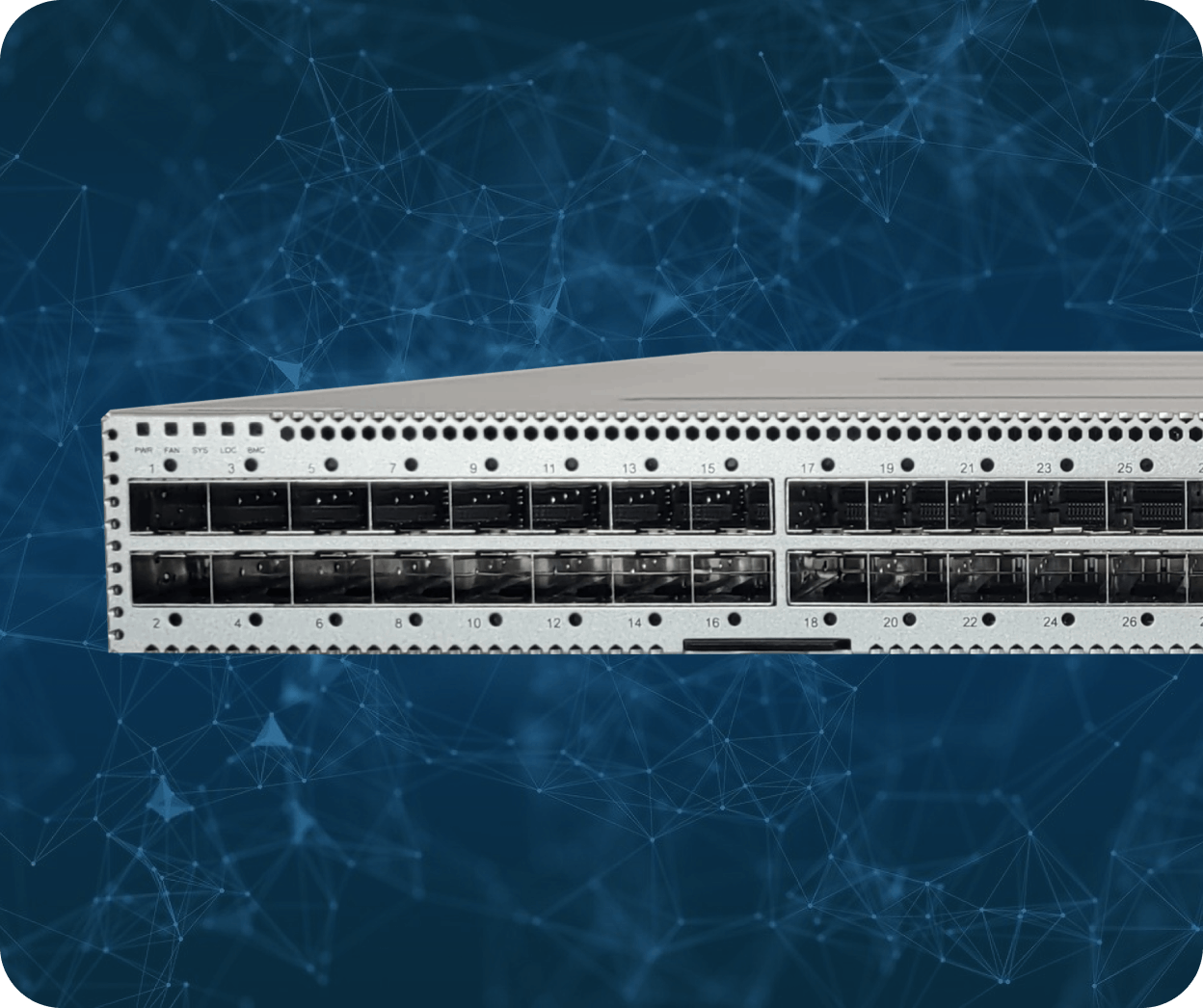
SmartNA-PortPlus

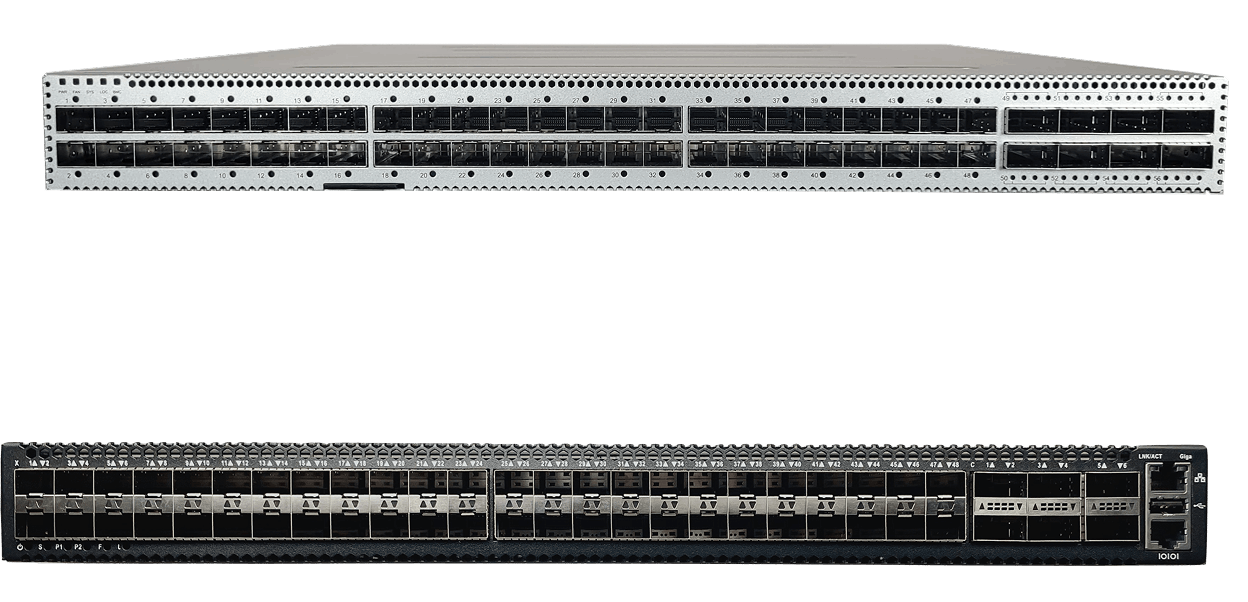
For data centre fabrics running 1G to 100G with room to scale, the SmartNA-PortPlus is Network Critical's hero packet broker, built to aggregate dense low-speed links onto fewer high-speed monitoring ports without sacrificing line-rate performance.

  • 48 x 1/10G ports plus 6 x 40/100G ports in the base unit, upgradable to 48 x 1/10/25G plus 8 x 40/100G
  • Scales to 194 ports across 1RU to 5RU by adding modules to the existing chassis
  • 1.8 Tbps non-blocking line-rate throughput
  • Custom P-Tag functionality for complex traffic processing workflows
  • Session-aware load balancing by IP address, protocol, port, VLAN, or MAC address
  • SNMPv3, RADIUS, and TACACS+ support for audit trail and accountability
  • Dual hot-swap power supplies and fans for resilience
  • Drag-n-Vu single pane of glass management with HTTPS and SSH access
SmartNA-PortPlus on blue background
person typing on futuristic laptop

When SmartNA-PortPlus is the right fit

  • You're aggregating dense racks of 1G and 10G links onto fewer high-speed monitoring and security tools
  • You need to scale port count as the data centre grows without replacing existing hardware
  • You're running multiple monitoring and security tools that each need full-fidelity, non-sampled traffic
  • You want network admins configuring changes directly through Drag-n-Vu, without specialist engineer callouts

Case studies: network packet brokers in data centre monitoring

Darktrace

Network Critical's SmartNA-PortPlus gave Darktrace's machine learning platform an integrated API for direct, software-controlled traffic filtering and port mapping. The autonomous integration eliminated manual reconfiguration, letting the security tool adapt to anomalies in real time. 

Read more

Bourne Leisure

Bourne Leisure deployed SmartNA-XL TAPs to aggregate multiple live links, convert mixed copper and fibre media, and connect new security tools to a space-saving 1RU system. The deployment protected reliability while extending ROI on existing security investment.


Read more
Bourne-Leisure


We chose the Network Critical equipment because of its flexibility to connect different types of live links to a space saving 1RU system and aggregate multiple links to a single tool. 

 —   Head of Network Architecture, Bourne Leisure 


Why SPAN ports fail for data centre monitoring 

SPAN drops packets under load

Switch SPAN ports prioritise production traffic over the mirrored copy, so packets get dropped during exactly the traffic spikes and outages when monitoring tools matter most. Incomplete captures mean root cause analysis runs on partial data, extending MTTR when SLA penalties are accruing. 

SPAN cannot scale port contention

Every additional monitoring or security tool competes for the same limited SPAN sessions on a switch. As data centres add SIEM, NDR, and APM tools, SPAN contention forces operators to choose which tool sees traffic and which goes blind, rather than aggregating to all of them. 

SPAN cannot deliver east-west visibility at scale

SPAN configurations are typically built around perimeter and north-south traffic, leaving lateral movement between racks and rows unmonitored. Network packet brokers extend full-fidelity capture to internal links without re-architecting the switch fabric. 

Why choose Network Critical for network packet brokers

Data centre operators choose Network Critical because the economics work at scale. Perpetual hardware licensing means no recurring per-port subscription fees, unlike the subscription-driven monitoring stacks that resell to the same customer every renewal cycle. The SmartNA-PortPlus scales from 48 to 194 ports without a forklift swap, and the SmartNA-PortPlus HyperCore carries that same scale-out model to 400G fabrics.

Proof comes from real deployments. The Darktrace integration shows API-driven traffic control working autonomously with a leading machine learning security platform, while the Bourne Leisure deployment demonstrates space-constrained aggregation protecting both reliability and ROI on existing security tool investment.

Drag-n-Vu's drag-and-drop interface removes the specialist-engineer dependency that makes traditional packet broker deployments expensive to operate, so network admins handle day-to-day configuration directly, and bypass TAPs keep inline security tools fail-safe rather than a single point of failure.

Frequently asked questions about network packet brokers for data centre monitoring 

  • A network packet broker aggregates, filters, and load balances traffic from live network links onto monitoring and security tools. In a data centre, it lets operators connect many low-speed links to fewer high-speed tool ports, protecting rack space and tool budgets as fabrics scale. 
  • SPAN ports mirror traffic from a switch but drop packets under load and contend for limited sessions as tool counts grow. A dedicated packet broker like SmartNA-PortPlus delivers full-fidelity, non-blocking capture at line rate, with no contention between tools. 
  • Dropped packets mean monitoring and security tools work from incomplete data, exactly when traffic spikes or incidents make full visibility most critical. Root cause analysis takes longer, and tools relying on full packet fidelity, such as NDR platforms, can miss real threats. See why network TAPs outperform SPAN

  • Evaluate non-blocking throughput at line rate, port density per rack unit, scale-out capacity without forklift upgrades, and management simplicity. The SmartNA-PortPlus delivers 1.8 Tbps non-blocking throughput and scales to 194 ports within the same chassis family. 
  • SmartNA-PortPlus includes an integrated API supporting HTTP and JSON, letting tools like Darktrace control filtering and port mapping directly. It also runs Drag-n-Vu for manual configuration through a single web interface, so existing tool stacks connect without custom integration work. 
  • Yes. The base unit supports 1/10/25G plus 40/100G interfaces at 1.8 Tbps non-blocking throughput, scaling to 194 ports across five rack units as capacity expands. For 200G and 400G fabrics, the SmartNA-PortPlus HyperCore extends the same model to 25.6 Tbps. 
  • Operators typically start with a 1RU SmartNA-PortPlus base unit and scale to 2RU, 3RU, or full 5RU configurations as port requirements grow. Bypass TAPs add fail-safe protection for inline security tools within the same deployment. 
  • The Darktrace case study shows SmartNA-PortPlus's API enabling autonomous, software-driven traffic control for an AI security platform. The Bourne Leisure case study demonstrates space-constrained aggregation of mixed copper and fibre links onto a 1RU system. 
  • Network Critical uses perpetual hardware licensing rather than recurring per-port subscriptions, which avoids the renewal-cycle cost increases common with subscription-driven monitoring stacks. Tool consolidation through aggregation also reduces the number of monitoring tools, and the licensing costs attached to each, that operators need to deploy. See the network packet brokers overview for product detail. 
  •  Yes. Filtering and traffic conditioning at the packet broker layer reduces the volume of traffic forwarded to SIEM and NDR tools, which directly lowers per-gigabyte ingestion costs without sacrificing visibility into the traffic that matters. 

  • Network Critical hardware ships with dual hot-swap power supplies and fans for resilience, and Drag-n-Vu management for day-to-day configuration without specialist callouts. For deployment scoping and ongoing support, talk to sales
  • SmartNA-PortPlus itself focuses on aggregation, filtering, and load balancing for monitoring and security tools. For inline tools that need automatic failover protection, bypass TAPs ensure a tool failure never takes down live production traffic.